

Key Takeaways About Pets and Cannabis
- Pets are naturally curious, so keeping cannabis products sealed, stored high, and out of reach helps prevent accidental exposure.
- THC can be toxic to some animals, and ingestion is not recommended.
- If you think a pet has eaten cannabis or an edible, contact a veterinarian right away instead of waiting to see if symptoms pass.
If you’ve ever had a dog stare at you while you’re unwrapping food, you already know how this goes. They don’t care what it is. If it smells interesting, it’s fair game.
Now add cannabis to that picture. A gummy on the counter. A brownie cooling on a rack. A jar that didn’t get closed all the way. To you, it’s obvious what’s off-limits. To them, it’s just something that smells like a snack.
Dogs and cats react to THC very differently from us, and often much more intensely. What feels mild to you can leave them disoriented, wobbly, or worse.
If cannabis is in your home, a few habits can help prevent an unexpected trip to the vet.

What Are the Dangers of Cannabis for Pets?
Dogs and food have a very simple rule: if it smells good, it’s probably food.
That’s why cannabis edibles get pets into trouble so easily. Gummies, brownies, and cookies just smell like snacks someone forgot to guard. And pets don’t really believe in just one bite. If they get access, they’ll usually keep going until it’s gone.
The problem is THC. Dogs and cats react to it much more strongly than people do. What feels mild to you can leave a pet wobbling, confused, or struggling to keep their footing.
Vets see this most often in dogs that ate edibles or loose cannabis. In one review of THC toxicity cases, most exposures happened after dogs ate cannabis products directly, usually plant material or infused foods.¹
The symptoms can look strange pretty quickly. Some pets become extremely sleepy. Others seem disoriented or sensitive to sound and touch. Wobbling, dilated pupils, and dribbling urine are all common signs veterinarians report.
Most dogs are highly sensitive to THC, and in larger amounts, it can affect heart rate, blood pressure, and coordination.1 Severe cases may involve tremors, seizures, or deep sedation that requires veterinary care.
Edibles add another complication because many contain ingredients already dangerous to pets, such as chocolate, raisins, or xylitol.
Cats can also be exposed, but it’s often through a different route than direct consumption. Smoke particles can settle on their fur, and because cats constantly groom themselves, those particles may later be swallowed during grooming.2
Animals also have an endocannabinoid system like humans, but it responds differently to cannabinoids, which helps explain why THC hits them harder.3
How to Prevent Exposure to Smoke

It’s pretty common for a dog to park themselves next to you the second you sit down. To them, you’re just hanging out together. If you’re smoking or vaping, though, that shared couch time suddenly includes the smoke in the air.
The easiest way to avoid that is to give your session a little space. If you can step outside, that solves most of the problem right away. Fresh air does a lot of the heavy lifting, and your pets don’t have to be anywhere near it.
If you’re smoking indoors, a little separation helps. Close the door, keep pets in another room, and let the air move around a bit. Opening a window or running a fan can help clear things out faster. Then just give the room a little time to air out before pets wander back in like they own the place.
Most pets want to be part of everything you do. Cooking dinner, opening snacks, sitting on the couch. They’re there for all of it. However, for their health and safety, smoke sessions may be better as a solo activity without them.
How to Prevent Pets From Eating Cannabis or Edibles
If you’ve ever had a dog stare you down while you’re opening food, you already know the problem. Anything that smells even remotely edible becomes their business immediately.
Cannabis edibles are especially tempting. Infused Gummies, brownies, and cookies just smell like snacks. And unlike people, animals don’t stop after one bite. If they get access, they’ll usually keep eating until it’s gone.
The easiest way to avoid that scenario is to treat cannabis products the same way you’d treat medication: keep them sealed and out of reach. A closed jar, a high cabinet, or a drawer pets can’t get into goes a long way.
It also helps to be mindful in the little moments. Don’t leave edibles on the counter while you step away. Close containers all the way. If you’re cooking with cannabis, clean up scraps and packaging right after you’re done so nothing tempting gets left behind.
Pets aren’t trying to be mischievous. They’re just following their noses. Keeping cannabis stored safely makes sure curiosity doesn’t turn into a trip to the vet.
What To Do If Your Pet Eats Cannabis

Sometimes a pet just beats you to it.
If you think your pet got into cannabis, the best thing to do is call a veterinarian right away.
It might feel a little awkward explaining what happened, but vets deal with this all the time. Being upfront actually makes their job easier. THC exposure can look pretty strange if you don’t know what caused it.
If you can, try to tell them what the pet may have eaten, about how much, and when it might have happened. Even a rough guess helps. If the packaging is nearby, bring it with you so they can see the ingredients and THC content.
Most pets recover with supportive care, but it’s still not something to wait out and hope for the best. If your pet suddenly seems unusually sleepy, wobbly, or confused after possible cannabis exposure, it’s worth getting professional help sooner rather than later.
What About CBD Products for Pets?
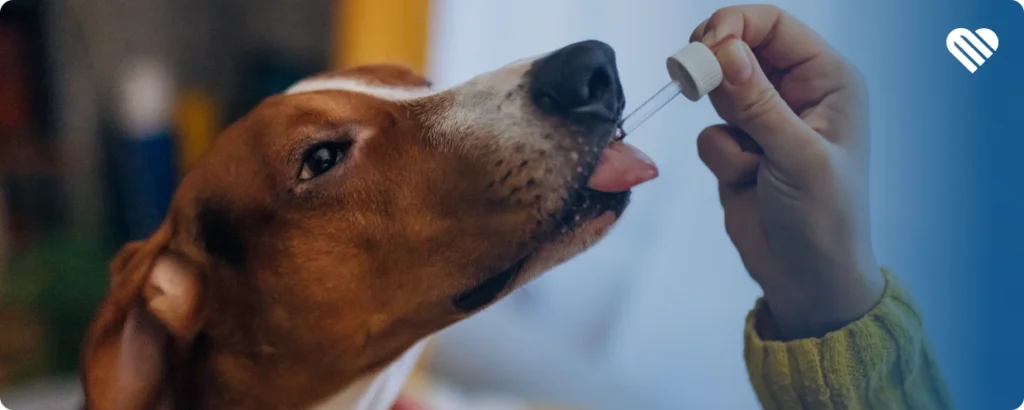
CBD tends to get lumped in with cannabis as one big category, but it’s a little different from THC.
Unlike THC, CBD doesn’t produce a high. That’s one reason it’s often marketed in products designed specifically for pets, like oils, treats, or chews. Some pet owners are curious about these products for things like mobility or general wellness.
Research on CBD in animals is still pretty limited, but early studies suggest it may be better tolerated than THC. In one study looking at escalating cannabinoid doses in cats, CBD didn’t produce the same unwanted side effects that THC did.4
That said, just because it’s better tolerated doesn’t automatically mean it’s risk-free. Dosing can be tricky, and product quality varies a lot across the market. Some products may contain more THC than the label suggests, which is exactly what you don’t want when pets are involved.
If you’re considering CBD products for a pet, it’s usually best to talk with a veterinarian first and look for products specifically formulated for animals. Those products are more likely to be dosed appropriately and tested for contaminants.
And just like any supplement or medication, it’s still important to store CBD products safely. Even if a product is meant for pets, a curious dog that eats the whole package at once can still run into problems.
References
- Binagia EM, Gregory EA, Yankin I. Clinical examination findings and electrolyte abnormalities of dogs with marijuana/tetrahydrocannabinol toxicity: 223 cases (January 2017–July 2021). Journal of the American Veterinary Medical Association. 2024;262(8):1–8. doi:https://doi.org/10.2460/javma.24.02.0092 ↩︎
- Kulpa JE, Paulionis LJ, Eglit GM, Vaughn DM. Safety and tolerability of escalating cannabinoid doses in healthy cats. Journal of Feline Medicine and Surgery. 2021;23(12):1162–1175. doi:https://doi.org/10.1177/1098612x211004215 ↩︎
- Silver RJ. The Endocannabinoid System of Animals. Animals. 2019;9(9):686. doi:https://doi.org/10.3390/ani9090686 ↩︎
- Janeczek A, Zawadzki M, Szpot P, Niedzwiedz A. Marijuana intoxication in a cat. Acta Veterinaria Scandinavica. 2018;60(1):44. Published July 11, 2018. doi:10.1186/s13028-018-0398-0 ↩︎
The information in this article and any included images or charts are for educational purposes only. This information is neither a substitute for, nor does it replace, professional legal advice or medical advice, diagnosis, or treatment. If you have any concerns or questions about laws, regulations, or your health, you should always consult with an attorney, physician or other licensed professional.