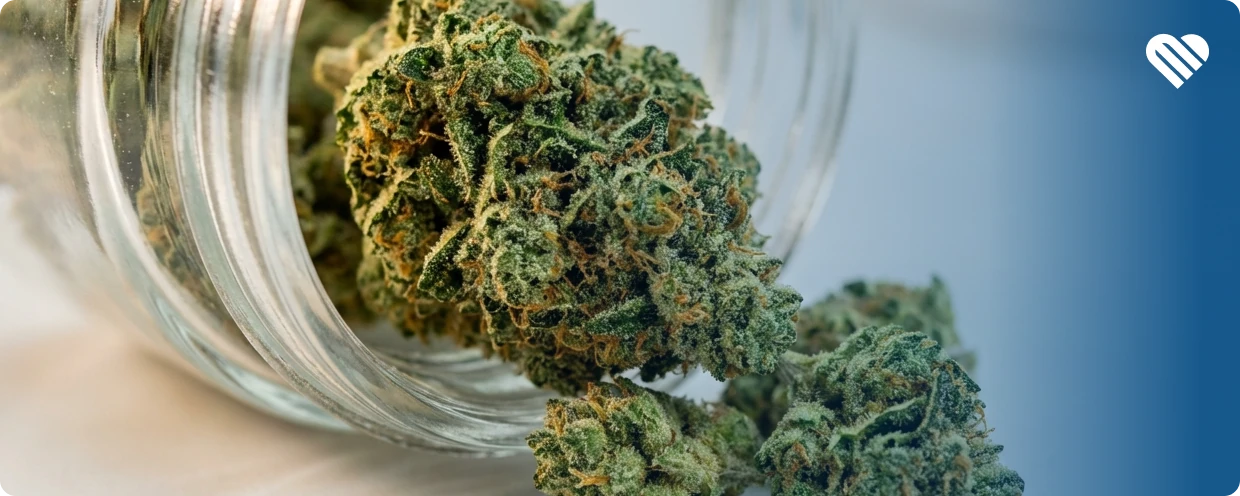

The Trump administration on Thursday formally moved medical cannabis to Schedule III, a landmark shift in federal drug policy that acknowledges the plant’s medical value and lowers barriers to research for the first time in more than 50 years.
The order, issued by the Justice Department, ends cannabis’s long run in Schedule I, a category reserved for substances with no accepted medical use. That designation has limited clinical research since 1970 and complicated access for patients who rely on cannabis for chronic pain, epilepsy, cancer‑related symptoms, and other conditions.
According to a report from the Washington Post, officials described the move as an effort to “boost medical research” and place cannabis in a category “similar to some common prescription painkillers.” The administration’s framing signals a focus on scientific evaluation rather than broader legalization.

DOJ Order Impacts Medical Cannabis Only
The change applies only to medical cannabis. It does not legalize adult‑use products, alter federal criminal penalties for recreational possession, or resolve the banking and tax challenges that state‑licensed businesses continue to face. But for the medical market, the shift is expected to have immediate effects.
Researchers will no longer need to navigate the restrictive Schedule I approval process, which has slowed or blocked studies for decades. Universities and medical centers may be more willing to pursue cannabis research, and pharmaceutical companies could explore new formulations or delivery systems. Physicians may also gain clearer guidance on dosing, safety, and interactions with other medications.
“These actions will enable more targeted, rigorous research into marijuana’s safety and efficacy, expanding patients’ access to treatments and empowering doctors to make better-informed healthcare decisions,” Acting Attorney General Todd Blanche wrote on the social media platform X.
What the Change Means for Patients and the Industry
The administration acted after months of internal debate and growing pressure from patients, researchers, and state officials who have urged the federal government to modernize its approach. Public support for medical cannabis remains high, and more than three dozen states now operate regulated medical programs.
President Donald Trump recently signaled impatience with the pace of federal drug policy changes, telling reporters he wanted agencies to move more quickly on issues that have broad public support. His comments suggested the White House was ready for a more decisive shift.
Under Schedule III, cannabis is grouped with substances that have accepted medical uses and lower abuse potential than drugs in Schedules I and II. The shift does not eliminate federal oversight. Products will still be regulated under the Controlled Substances Act, and federal agencies will need to update guidance, enforcement protocols, and research procedures.
Advocates Say the Move Leaves Key Gaps Unresolved
Industry leaders and patient advocates welcomed the announcement but noted its limits. Because the order applies only to medical cannabis, adult‑use operators will continue to face federal tax burdens under Section 280E, along with banking challenges and restrictions on interstate commerce. Those issues will remain unresolved unless Congress acts.
Adam J. Smitch, executive director of the Marijuana Policy Project, wrote that “Rescheduling cannabis is a historic move towards sanity in cannabis policy.”
“We hope that this will open the door to more medical research, inspire states to guarantee access to safe, regulated cannabinoids for patients who desperately need them, and that the regulated industry might finally be treated more fairly under the federal tax code,” Smith said in a statement from the cannabis policy reform advocacy group.
“But a move to Schedule III stops short of the systemic change we need. It does nothing to end hundreds of thousands of possession arrests each year, nor does it do anything to fix the untenable, ongoing disconnect between federal prohibition and the regulated state markets under which more than half of American adults live,” he added. “While we welcome this important step, the federal government should treat cannabis the same way it treats alcohol, which means descheduling cannabis entirely.”
Despite the limitations, the reclassification marks a turning point for medical cannabis patients. For years, advocates have argued that Schedule I status contradicted both scientific evidence and the experiences of millions of patients who use cannabis under state law. The new classification acknowledges that cannabis has therapeutic value and should be studied and regulated accordingly.
State medical programs are expected to continue operating as usual while federal agencies update their rules. The Justice Department has not released a detailed implementation timeline, and it may take months for the full impact of the change to be felt.
Catch up on the latest cannabis news and sign up for NuggMD's Weekly Sesh newsletter for the latest consumer tips, industry updates, and product recommendations.
The information in this article and any included images or charts are for educational purposes only. This information is neither a substitute for, nor does it replace, professional legal advice or medical advice, diagnosis, or treatment. If you have any concerns or questions about laws, regulations, or your health, you should always consult with an attorney, physician or other licensed professional.