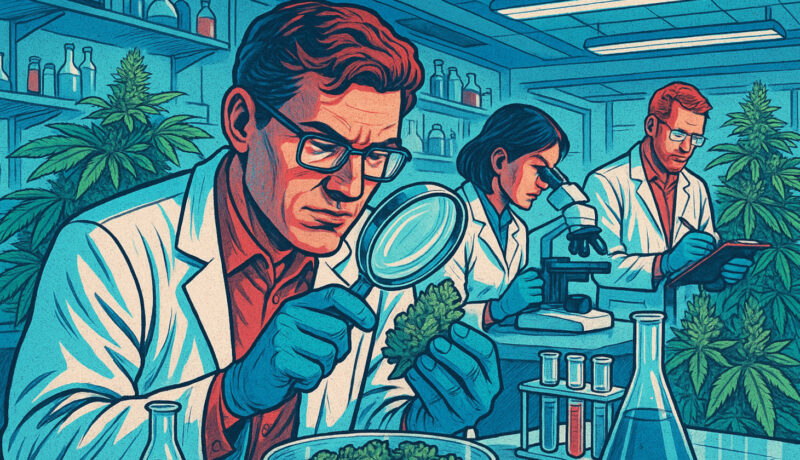
The cannabis compound cannabidiol (CBD) “holds substantial promise as an anti-tumor agent,” according to the findings of recent research.
The research was conducted by a group of Chinese medical school researchers and funded by the National Natural Science Fund of China. A report on the study, which has not yet been peer-reviewed, was published this month by the journal Phytomedicine.
The researchers conducted a systematic review of studies investigating the anticancer properties of CBD. Much of the existing research has focused on how cancer cells survive by interfering with normal biological processes, including growth cues, stress responses, and immune pathways, according to a Marijuana Moment report on the study. They determined that, rather than targeting a single system, CBD interacts with multiple systems in complementary and overlapping ways to push cancer cells toward collapse.
“CBD has emerged as a promising therapeutic agent in oncology, demonstrating antitumor activity across various cancer types through multiple molecular mechanisms,” the researchers wrote. “Preclinical studies have established that CBD interferes with key stages of tumor progression, including cell proliferation, apoptosis, angiogenesis, and metastasis.”
Researchers Determine CBD Is Effective Against Several Types of Cancer
The researchers investigated CBD’s effects on multiple types of cancer, including aggressive forms of the disease such as glioblastoma, a form of brain cancer. They also reported that CBD can suppress the growth and spreading of many other types of cancer, such as breast, lung, prostate, colorectal, ovarian, and other cancers.
“CBD exhibits multi-targeted anti-tumor effects by disrupting key cancer hallmarks,” the researchers found.
The research showed that in colon cancer models, CBD interferes with a receptor that helps tumors grow and migrate. Blocking the receptor GPR55 appears to disrupt a key pathway used by cancer cells to rapidly proliferate, and early research suggests it may also help certain tumors respond better to chemotherapy. In other laboratory studies, CBD has been shown to silence genes linked to rapid, aggressive growth while activating stress‑response pathways that encourage cells to slow their growth.
The researchers reported that CBD had a similar but slightly different effect on lung and breast cancer cells. In non-small cell lung cancer, a combination of CBD and THC inhibits tumor growth by interfering with epithelial-mesenchymal transition, a process that allows cancer cells to spread throughout the body.
In breast cancer models, CBD has been shown to interrupt the development of cancer cells, leading to apoptosis (programmed cell death). The compound also interferes with autophagy, a process by which cells break down and recycle old proteins, making it destructive and compromising cellular integrity.
“Cannabidiol (CBD), an FDA-approved and well-tolerated compound, demonstrates promising antitumor effects by inhibiting cancer growth, metastasis, and angiogenesis, while also alleviating cancer-related symptoms such as pain and nausea,” the researchers wrote.
Using CBD Effectively Presents Challenges
The research team also noted practical challenges associated with using CBD as an anti-cancer agent. The compound is poorly absorbed when administered orally, and the absorbed CBD is metabolized rapidly. As a result, only a small fraction of the CBD taken may actually reach tumor tissue. The authors of the study also noted that other scientists are investigating nanoparticle-based CBD delivery systems that improve absorption, target tumors with more precision, and reduce side effects.
The researchers note that real progress will take careful, systematic work. Advanced tools such as single‑cell sequencing may help scientists understand how different groups of tumor cells respond to CBD. Well‑designed clinical trials will be crucial to determine whether the effects observed in early laboratory studies translate into meaningful benefits for patients, particularly when CBD is used alongside standard cancer treatments.
“Future trials must stratify patients by tumor type and molecular markers to establish correlations between dosing, timing, and efficacy,” they wrote.
Catch up on the latest cannabis news and sign up for NuggMD's Weekly Sesh newsletter for the latest consumer tips, industry updates, and product recommendations.
The information in this article and any included images or charts are for educational purposes only. This information is neither a substitute for, nor does it replace, professional legal advice or medical advice, diagnosis, or treatment. If you have any concerns or questions about laws, regulations, or your health, you should always consult with an attorney, physician or other licensed professional.