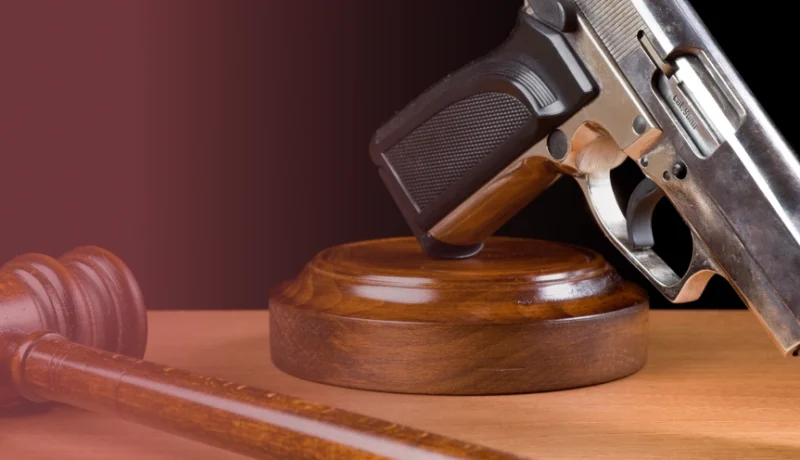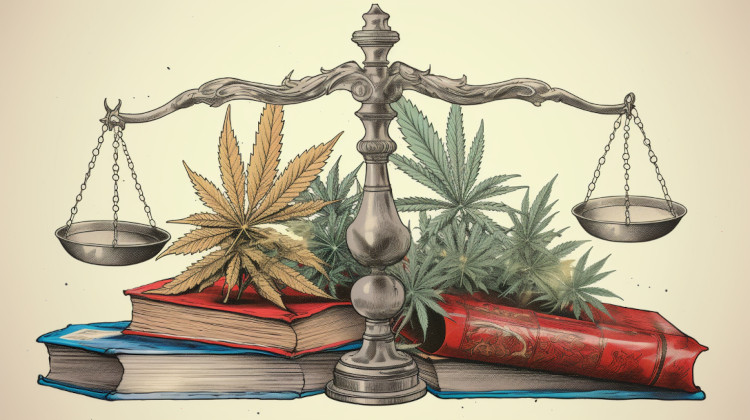
The National Rifle Association called on the U.S. Supreme Court to strike down a federal ban on gun ownership by cannabis users, saying the restriction is an unconstitutional violation of their constitutional rights. In an amicus brief in a pending case challenging the restriction, the gun rights lobbying organization asked the court to affirm a lower court’s decision that the restriction is a violation of the Second Amendment to the U.S. Constitution.
The NRA’s argument is based on a previous Supreme Court decision on firearms restrictions, which held that laws limiting gun rights must be based on a historical precedent, Marijuana Moment reported. The group filed an amicus brief in the case of U.S. v. Hemani, which the court agreed to hear in October.
“To justify firearms prohibition for marijuana users when they are not intoxicated, the government must prove that the ban is consistent with our nation’s historical tradition of firearm regulation,” the NRA wrote in its brief. “That tradition supports restrictions on the use of firearms while intoxicated, but it does not support disarming individuals when they are sober merely because they sometimes use intoxicants.”
“Throughout American history, legislatures recognized that intoxication could temporarily increase the danger of firearms misuse. But they did not respond by entirely disarming people based on their status as users,” the brief filed alongside other Second Amendment groups said. “Instead, historical intoxication laws regulated conduct: restricting the carrying, discharge, or purchase of firearms only while a person was intoxicated and only for as long as that condition lasted. The historical record thus reflects a consistent tradition of narrow, situational restrictions rather than categorical disarmament.”
Case Challenges Federal Gun Law
The government’s case is against a cannabis consumer and cocaine user prosecuted under Section 922(g)(3) of the U.S. Code. The legislation bars those who use or are addicted to “unlawful drugs” from purchasing or possessing firearms or ammunition. Hemani’s lawyer has argued that historical support for the gun ban is “tenuous at best.” He also noted that nearly half of U.S. states have legalized recreational cannabis for adults.
“Bereft of relevant support, the government elides the historical tradition of ‘firearm regulation,’ and instead offers strained analogies to civil-commitment laws for alcoholics who could not manage their affairs and to vagrancy laws that detained people in forced labor for loafing, juggling, or wearing the clothes of the opposite sex,” the NRA brief states. “The government also cites surety laws, but those laws undermine its case because they required an individualized judicial finding of dangerousness.”
“Besides contradicting the specific American historical tradition about regulating firearms and intoxicants, the prosecution of Hemani for marijuana use violates a broader rule: individual disarmament must be based on dangerousness. Yet the government has made no serious effort to establish a connection between marijuana use and dangerousness. Rather than focusing on marijuana, it discusses drugs in the abstract and relies primarily on violent incidents involving methamphetamine, heroin, tranquilizers, quaaludes, and PCP.”
“This Court should hold 18 U.S.C. § 922(g)(3) unconstitutional as applied to Hemani because the government failed to demonstrate that disarming him based on marijuana use is consistent with the nation’s historical tradition of firearm regulation,” NRA concluded. “The judgment below should be affirmed.”
Cannabis Groups Also File Briefs with Supreme Court
The Supreme Court also heard from cannabis policy reform advocacy groups, including the National Organization for the Reform of Marijuana Laws (NORML) and the Drug Policy Alliance. In a separate amicus brief, NORML argued that prior to the prohibition of cannabis, no similar ban on gun ownership existed.
“For centuries, Americans cultivated, consumed, and prescribed cannabis without any suggestion that doing so warranted loss of firearms rights. And state-legal medical cannabis users readily continue to do so today with the protection of Congress,” the brief explains. “The historical analogs the government identifies concern temporary restrictions on carrying or firing weapons while intoxicated or on persons adjudged dangerous — not blanket bans on all users of a disfavored substance.”
The Supreme Court has scheduled oral arguments in the case for March 2.
Catch up on the latest cannabis news and sign up for NuggMD's Weekly Sesh newsletter for the latest consumer tips, industry updates, and product recommendations.
The information in this article and any included images or charts are for educational purposes only. This information is neither a substitute for, nor does it replace, professional legal advice or medical advice, diagnosis, or treatment. If you have any concerns or questions about laws, regulations, or your health, you should always consult with an attorney, physician or other licensed professional.