
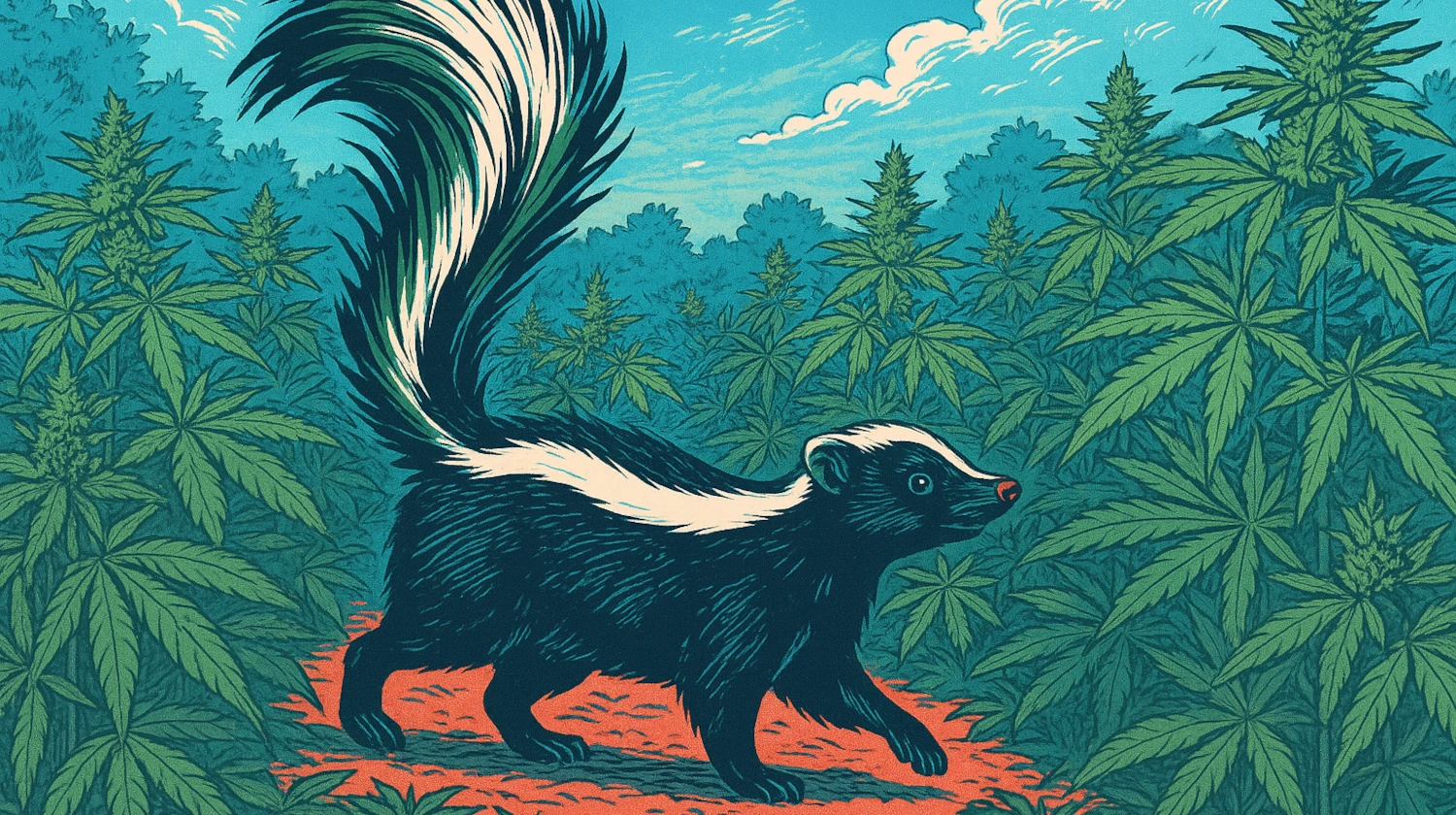
Key Takeaways About Skunk Weed Strains
- Skunk strains of cannabis are known for their pungent aroma.
- The skunky odor of these strains is caused by cannasulfur compounds.
- Dominant terpenes in skunk strains include myrcene, limonene, and pinene.
Skunk weed strains are just one of the many families of cannabis cultivars. The different strains in this family each have unique characteristics, but they all share one specific property: they smell like a skunk. This skunky, gassy odor may seem off-putting at first. But once a cannabis consumer gives them a try, they often find the aroma pleasant and a positive sign of what’s to come.
What are Skunk Strains?
The first skunk strain, Skunk #1, is a hybrid cultivar of cannabis that was bred using genetics from Afghani, Acapulco Gold, and Colombian Gold varieties. After arriving on the cannabis scene in the late 1970s, the original Skunk was bred with other cultivars, yielding a vast number of slightly different strains.
Although they’ve been around for generations, for many years the source of the odor that skunk weed is famous for was unknown. In 2019, researchers at the cannabis company Abstrax set out to find out exactly what makes skunk strains smell so skunky. After analyzing hundreds of different cultivars for their chemical makeup, the researchers determined that a group of chemicals they dubbed cannasulfur compounds (CSCs) are likely largely responsible for the skunky aroma found in many cannabis strains. The presence of these compounds in varying amounts combined with each strain’s terpene profile creates the unique aroma of each cultivar.
Today's skunk strains come from the lineage of the original Skunk #1 and feature those cannasulfur compounds prominently, giving them their distinctive namesake odor.
What are the Reported Effects of Skunk Weed Strains?

Many users report that skunk strains often induce feelings of happiness or euphoria, though effects can vary by consumer. Cultivars including Skunk #1 often impart a buzz that is described as energizing by many consumers. These strains also often stimulate appetite.
Why Do Patients Choose Skunk Strains?
During their analysis of skunk weed strains, the researchers at Abstrax noticed that CSCs are chemically similar to compounds found in garlic. Although more research is needed, they hypothesize that the CSCs in skunk weed may have health benefits similar to garlic.
Medical cannabis patients who use skunk strains report that they can help relieve stress, anxiety, and depression. However, more research on cannabis is needed before we can understand the true potential of the plant.
Main Terpenes in Skunk Strains

While CSCs appear to be largely responsible for the skunky odor of some cannabis strains, terpenes like myrcene, limonene, and pinene are responsible for the rest of the complex aroma.
Skunk strains are known for the terpenes:
- Myrcene: Myrcene has been studied for potential anti-inflammatory and sedative properties. It's one of the most cannabis terpenes and is the main terpene in 20-40% of strains.
- Limonene: Limonene is known for its citrus aroma, so it's no surprise you can find it in citrus fruits, like lemons and grapefruits. Researchers are looking into limonene's possible neuroprotective, anti-cancer, mood-boosting, and anti-inflammatory effects.
- Pinene: Scientists have investigated pinene for anti-inflammatory, anti-anxiety, and possible antioxidant properties. This pine-scented terpene is found abundantly in coniferous and spruce trees.
It's the complex blending of myrcene, pinene, and limonene along with cannasulfur compounds that gives skunk strains their distinctive smell and possibly some of their effects.
The Top 5 Skunk Weed Strains
While nearly all commercially available cannabis strains have a dedicated fan base, several skunks have risen to the best in class.
- Skunk #1 is the original skunk strain and a parent of the others. It is known for its energizing, happy, and euphoric effects, which many find uplifting. Many consumers report using the strain to relieve stress, anxiety, and depression. Potential negative side effects include paranoia, dry eyes, and dry mouth. Dominant terpenes include myrcene, limonene, and pinene.
- Super Skunk is a progeny of Skunk #1 and Afghani strains that produces an extra-skunky aroma and relaxing effects. Fans of the cultivar report using it for anxiety, pain, and stress. Like its parent, possible side effects include paranoia, dry eyes, and dry mouth. Dominant terpenes in Super Skunk include caryophyllene, limonene, and myrcene.
- Island Sweet Skunk is known for inducing a happy, energetic, and uplifting high. Patients report using the strain to treat pain, stress, and depression. Possible side effects include dry eyes, dry mouth, anxiety, and paranoia. Myrcene, terpinolene, and pinene are often the most dominant terpenes in this strain.
- Lemon Skunk is a strain known for its citrusy flavor and happy, uplifting, and energizing high. Patients report using Lemon Skunk to help relieve stress, depression, and pain. Dominant terpenes include caryophyllene, myrcene, and limonene. Potential negative side effects of Lemon Skunk include dry mouth, dry eyes, and paranoia.
- Grease Monkey, also known as Grease Bucket, is a skunky hybrid known for its sleepy, relaxing effects and propensity to induce hunger. Dominant terpenes include caryophyllene, limonene, and myrcene. Reported side effects include dry mouth, dizziness, and anxiety.
Many more skunk strains are available at dispensaries across the country, and new hybrids are being introduced all the time.
The information in this article and any included images or charts are for educational purposes only. This information is neither a substitute for, nor does it replace, professional legal advice or medical advice, diagnosis, or treatment. If you have any concerns or questions about laws, regulations, or your health, you should always consult with an attorney, physician or other licensed professional.