
Key Takeaways About Cannabis Deserts
- Cannabis deserts limit practical access to regulated products for many patients.
- Local control is the main reason cannabis deserts form, with rules varying widely by state local policy structures.
- Patients can improve access by understanding local laws, using available options, and engaging in community advocacy.
Legalization doesn’t always guarantee convenience, especially for patients who rely on cannabis as part of their health routine. In some communities, the nearest dispensary or delivery service may be hours away, creating real barriers to safe, reliable access. If you find yourself in a region where legal cannabis options are scarce or unavailable despite statewide legalization, you are in what is known as a cannabis desert.
What is a Cannabis Desert?
For many medical cannabis patients, access is not simply a matter of convenience. It is part of maintaining a consistent, reliable source of products that meet their needs.
A cannabis desert forms when that access breaks down.
In practical terms, a cannabis desert is a region where legal cannabis retailers, delivery services, or other lawful access points are so limited that patients have no practical way to obtain regulated products close to home.
Cannabis deserts are made up of entire communities, sometimes entire counties, where local bans, zoning restrictions, or slow licensing rollouts leave patients with few or no legal options. In rural regions, the problem can be even more pronounced because long distances, limited public transportation, and higher travel costs make access even harder.
For patients, the impact is immediate. Long drives can make it difficult to maintain a steady supply, especially for those managing chronic conditions or mobility limitations.
Limited access can also mean fewer product choices, higher prices, and difficulty finding the same formulations on a regular basis. Over time, these barriers can push patients toward unregulated sources or force them to go without the products that help them most.
What Causes Cannabis Deserts?

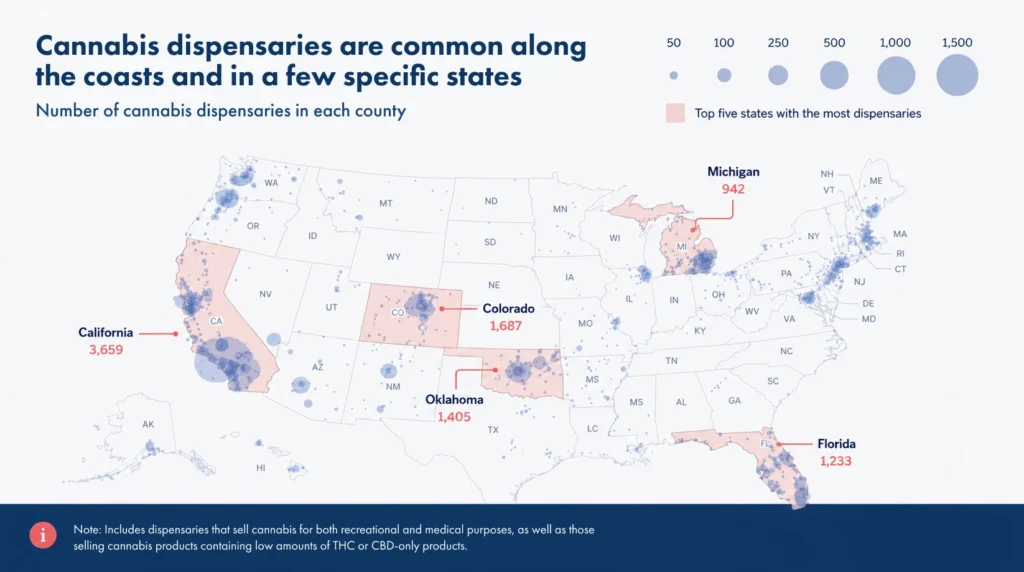
Cannabis deserts form because most states give local governments broad authority over whether cannabis businesses can operate in their communities.
Local Prohibition
California is a clear example of this structure. Cities and counties can choose to allow or prohibit cannabis businesses, and more than half (53%) still prohibit them, according to state data. When several neighboring jurisdictions take the same approach, large regions end up without any legal access.
Licensing Limits, Zoning Rules
Zoning rules and licensing limits can create similar barriers. Even when a city allows cannabis businesses, strict zoning or a small number of available licenses can leave entire neighborhoods or towns without practical access to regulated cannabis.
Slow licensing rollouts exacerbate the problem, as some states take years to approve enough operators to serve the full population.
Economic Barriers
Economic factors also play a role in the creation of cannabis deserts. Opening a dispensary requires significant capital, and many communities have limited commercial space or high real estate costs. These conditions can make it difficult for operators to establish a presence even when local rules permit it.
New York offers a different model that helps reduce the likelihood of cannabis deserts. Municipalities there had a single opportunity to opt out of adult-use retail and on-site consumption before the end of 2021. Those that did not opt out during that window cannot ban dispensaries now. Local governments can still set reasonable rules for zoning and operating hours, but they cannot prohibit licensed businesses entirely. This structure preserves local input while ensuring that access cannot be blocked across entire regions.
Some states have also taken steps to protect medical access specifically. California’s Medicinal Cannabis Patients’ Right of Access Act requires every city and county to allow medical cannabis delivery. This does not eliminate cannabis deserts, but it ensures that patients have at least one legal pathway to regulated products.
What Can You Do If You Live in a Cannabis Desert?

Living in a cannabis desert can feel discouraging, but patients still have several ways to navigate limited access while working toward long-term solutions.
Learn Your Local Laws
The first step is understanding the rules in your area. State laws and local ordinances determine whether dispensaries are allowed, whether delivery is permitted, and whether caregiver programs or reciprocity agreements are available. Knowing which rules apply to your community helps you identify the options already available to you.
Delivery services can be an important resource for patients in areas where they are allowed. Some states permit statewide delivery, and others allow medical delivery even in places that prohibit storefronts. Caregiver programs can also support patients who have difficulty traveling.
In states that recognize medical cards from other jurisdictions, reciprocity may offer a temporary way to access regulated products when traveling across state lines, provided all laws are followed. Telemedicine evaluations can also reduce the burden of travel for patients who need to obtain or renew a medical cannabis recommendation.
Advocate for Change
Local engagement and advocacy can improve access to cannabis over time. City councils and county boards often revisit cannabis rules as markets mature, especially when issues like zoning, operating hours, or local availability come up for review. When these discussions occur, patient testimony can help officials understand how limited access affects daily life.
Find Local Decision-Makers
Patients can usually find information about local decision-makers by visiting their city or county government website. This is often listed under sections like City Council, Board of Supervisors, or County Commissioners.
These pages typically include meeting calendars, agendas, and instructions for public participation. Many local governments also post recordings or summaries of past meetings, which can help patients understand how decisions are made and when cannabis-related topics are being discussed.
Understanding How Public Comments Work
Public input is often gathered through public comment, which allows residents to share feedback directly with local officials. Comments may be given during meetings or submitted in writing ahead of time.
Written comments are commonly accepted by email or through online forms linked in meeting agendas. Spoken comments are usually limited to a few minutes and do not require policy or legal expertise. Officials are primarily listening to how rules affect people in everyday life.
Work With Community Organizations
Community organizations can also be valuable partners. Patient groups, public health advocates, and local coalitions often track policy developments and share information about upcoming meetings, comment periods, or proposed changes. Working with these groups can help patients stay informed, understand timelines, and add their voices to broader efforts to improve access.
Share Personal Experiences
Sharing personal experiences can be especially effective. Clear, specific examples, such as long travel times to reach a dispensary, inconsistent product availability, or difficulty maintaining a consistent routine due to local restrictions, can help policymakers understand the real impact of cannabis deserts.
When framed around health, safety, affordability, and continuity of care, these experiences often provide context that data alone cannot.
Ways to Participate Beyond Meetings
Participation doesn’t always require attending meetings in person. Many patients choose to submit written comments, email local representatives directly, or sign up for local government alerts to stay aware of policy discussions. Even small steps can help ensure patient needs remain part of the conversation as local cannabis policies continue to evolve.
A Look Ahead at Patient Access
Cannabis deserts continue to limit safe and reliable access for many patients, even in states that have legalized the plant. These gaps make it harder to maintain consistent care and often lead people to rely on less reliable sources.
Progress takes time, but informed and engaged communities can help shift local policy toward better access. When patients understand the rules, use the options available to them, and share their experiences, they help create the conditions for a more accessible and patient-centered cannabis landscape in the future.
The information in this article and any included images or charts are for educational purposes only. This information is neither a substitute for, nor does it replace, professional legal advice or medical advice, diagnosis, or treatment. If you have any concerns or questions about laws, regulations, or your health, you should always consult with an attorney, physician or other licensed professional.