Key Takeaways About Off Duty Cannabis Use
- Police officers and first responders are often barred from using cannabis.
- Some states have employment protections for cannabis users.
- Protections may not apply to workers in safety-sensitive positions, including first responders.
Medical cannabis is increasingly used by patients of all demographics, including those working in high-pressure professions like law enforcement and emergency services. However, police officers, firefighters, and EMTs are generally subjected to periodic drug testing, even in states that have legalized cannabis.
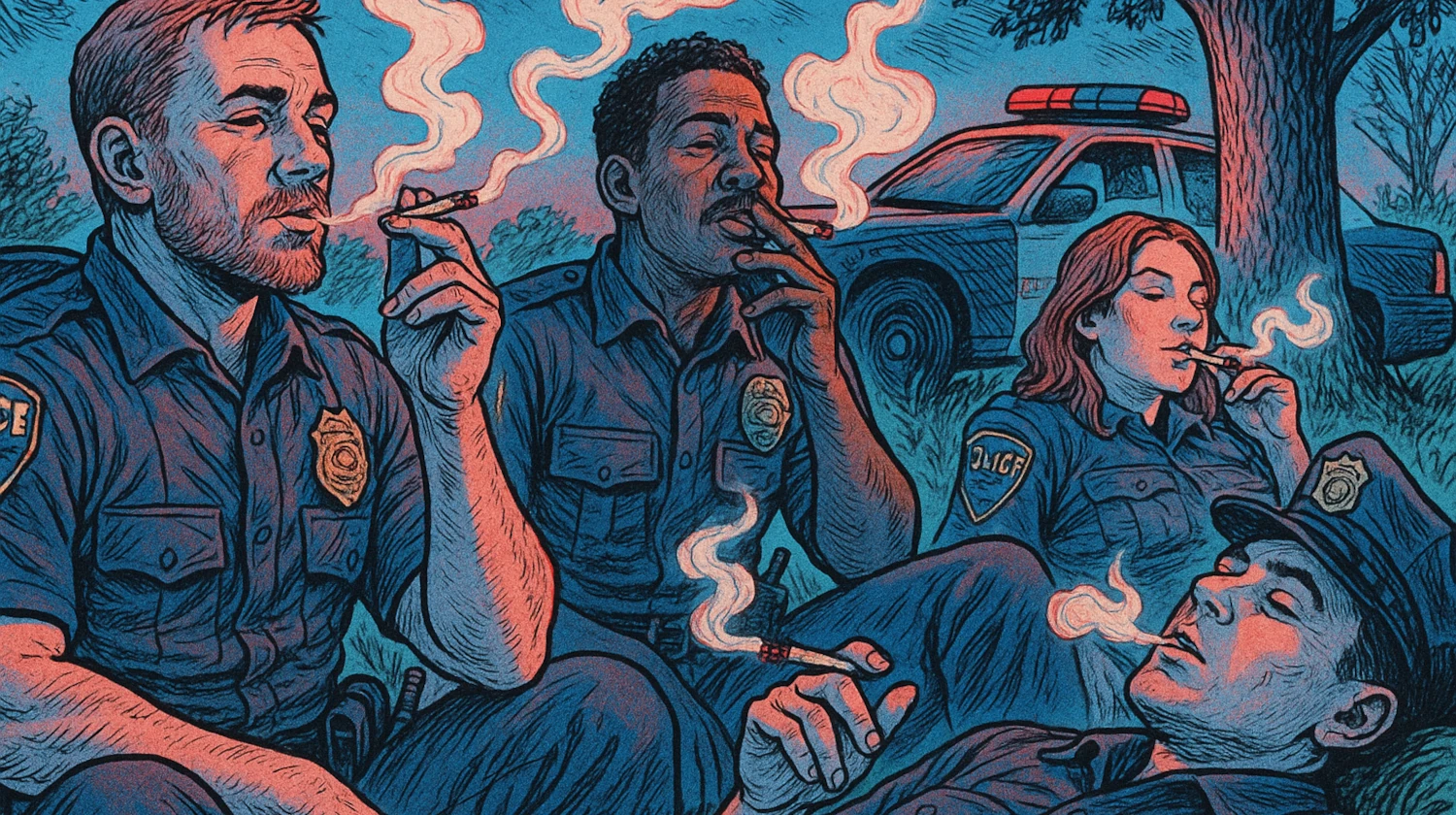
So what happens when one of these public servants tests positive for weed in a legal state? Are cops and other first responders allowed to smoke weed when they are off duty?
Can Cops Smoke Weed Off Duty in My State?
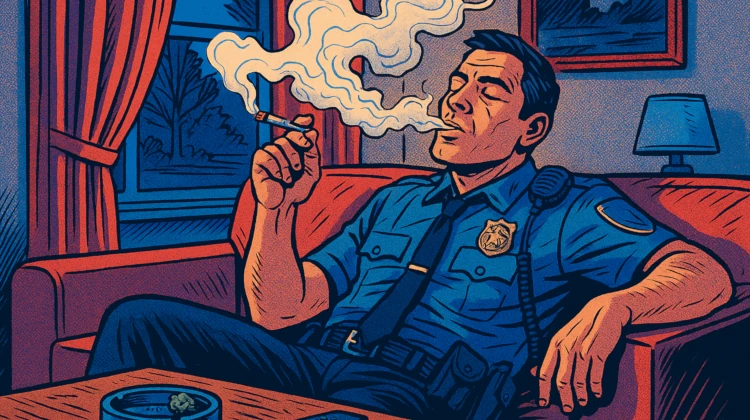
Whether police officers are allowed to smoke cannabis is mainly dependent on the state they live in.
Many states that have legalized cannabis have enacted employment protections for consumers, and some jurisdictions extend these rights to cops. As a result, in some states, police officers are allowed to smoke weed. In many others, however, law enforcement officers are still barred from lighting up and can be fired if they test positive for weed, depending on department policy.
Employment protections for cannabis users only apply to off-duty use. These laws do not allow employees to be high or impaired while they are working. Employment protections only apply to cannabis, so cops covered by these laws may still be subject to drug tests for other substances.
As a note: “First responder” in state law language typically refers to a law enforcement officer, emergency medical services personnel, firefighter, or public safety telecommunicator.
Some of the states that allow police to consume cannabis while off duty include:
California
The Golden State’s employment protection law for cannabis users covers first responders, so police officers are generally permitted to use cannabis when they are not working.
Illinois
First responders can’t be tested for off-duty cannabis use in Illinois unless they are suspected of using cannabis on duty, according to a state law known as the First Responder Cannabis Testing Act.
Maine
Guidance from the Maine Department of Labor on the state’s employment protections for cannabis consumers does not explicitly include an exception for police and first responders. As a result, these protections may extend to workers in these occupations, allowing them to use cannabis outside working hours. However, this has yet to be tested legally.
Minnesota
After adult-use cannabis was legalized in Minnesota, the state also added protections for most employees for off-duty use of cannabis, including first responders.
New Jersey
The state Attorney General’s office has stated that police can use cannabis while they are not on duty, ruling that New Jersey’s employment protections extend to the police and possibly other first responders, as long as they aren’t on a federal task force.
Rhode Island
Employment protections in Rhode Island likely apply to first responders, giving police and other first responders the right to use cannabis while off duty. However, employers may still be able to prohibit cannabis use for up to 24 hours before a work shift for public safety first responder jobs.
Utah
The Beehive State’s medical cannabis employment protections statute covers government workers, including police and other first responders, allowing them to use the plant for medicinal purposes while not working if they are qualifying, registered medical cannabis patients.
While these states have adopted employee protections for cannabis users that apply to law enforcement officers, it should be noted that some municipalities have objected to these policies. Citing the continued federal illegality of cannabis and laws denying cannabis users the right to possess firearms, some local governments have opted to maintain policies banning the use of cannabis by police officers.
In other states, employment protections for cannabis users often do not apply to first responders, who work in so-called safety-sensitive positions. In these states, cops are not allowed to smoke weed or use cannabis in other ways.
Can Firefighters Smoke Weed?
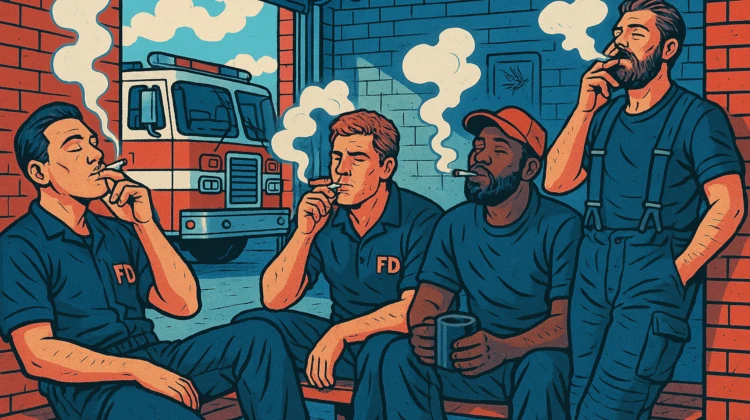
Because firefighters don’t carry weapons, employment policies governing cannabis use by firefighters are sometimes less strict than those for police officers. In 2025, the local government of Bernalillo County, New Mexico, reached an agreement with a union representing firefighters to allow its members to use cannabis medicinally or recreationally while off duty.
City leaders in Springfield, Illinois, adopted a policy in 2022 that exempts most firefighters from drug screenings for cannabis. Additionally, the city’s counsel noted in a public meeting that employees cannot be fired for using cannabis while off duty.
In 2022, a firefighter in Ogden, Utah, was reinstated after being suspended for having a medical cannabis card. The firefighter had sued the city, arguing that his recommendation to use cannabis was protected under the state’s Medical Cannabis Act.
Can EMTs Smoke Weed?
Employment protections for emergency medical technicians are generally similar to those for firefighters. In jurisdictions that allow cannabis use for firefighters, EMTs are likely covered by similar protections or policies.
Conflicts With Federal Law

Some government leaders and law enforcement agencies cite conflicts with federal law as justification to continue the prohibition on cannabis use by law enforcement officers. Under federal law, it is illegal for cannabis users to possess firearms. Since most police officers are required to carry a gun as a condition of employment, many agencies ban their officers from using cannabis, even in states where it’s legal.
Additionally, law enforcement officers are sworn to uphold federal law. Certain policymakers maintain that this duty is inconsistent with cannabis use as long as the plant is illegal under federal law.
What Constitutes a Safety-Sensitive Position?
Many laws that protect cannabis consumers’ employment protections do not apply to those who work in safety-sensitive positions. Likewise, the definition of a safety-sensitive position varies by jurisdiction.
Many agencies consider driving-related jobs, including many law enforcement roles, to be safety-sensitive. Occupations that require operating heavy machinery or carrying a firearm are typically considered safety-sensitive, as well.
So, despite the protections in place to safeguard employees’ rights to use cannabis, many police officers, firefighters, and other emergency workers will find these provisions do not apply to their jobs.
Proceed with Caution
Since not every state with legal cannabis has laws that specifically protect police officers and other first responders who may want to use the plant, workers in these fields should consider seeking legal advice. Even in states that protect the employment rights of cannabis consumers, these policies often do not apply to those in safety-sensitive positions. Precisely how these policies will be applied is often unclear.
The information in this article and any included images or charts are for educational purposes only. This information is neither a substitute for, nor does it replace, professional legal advice or medical advice, diagnosis, or treatment. If you have any concerns or questions about laws, regulations, or your health, you should always consult with an attorney, physician or other licensed professional.