In This Article
- Can You Bring Edibles on a Plane?
- Checked Bag or Carry-On: Does it Matter?
- How Federal Law Impacts Flying With Edibles
- What Does the TSA Say About Edibles?
- Can Airport Baggage Scanners Detect Edibles?
- Can Drug Dogs Smell Edibles?
- The Legal Consequences of Flying With Edibles
- What Cannabis Patients Can Do Instead of Bringing Edibles on a Plane
Key Takeaways About Bringing Edibles on a Plane
- It is illegal under federal law to bring cannabis edibles on planes.
- While currently low-to-no THC hemp edibles are permitted, rules will tighten in 2026.
- Medical cannabis patients should consider traveling to states where they can legally buy what they need.
Among the many different cannabis consumption methods, edibles are the most convenient and discreet. Because of these characteristics, many patients believe that cannabis edibles are perfect for traveling.
But what about when it’s time to take to the skies? Is it okay to take cannabis edibles on a plane? As with many questions about cannabis these days, the answer is “no, unless the product is made from legal hemp, but even then, maybe not after next year.”
Can You Bring Edibles on a Plane?
Cannabis edibles purchased at a dispensary or made at home from state-legal cannabis are still illegal under federal law, so they cannot be legally carried onto a plane or placed in checked baggage. The federal government regulates all commercial air travel, so federal laws and regulations apply to everyone on board an aircraft. Transportation Safety Administration (TSA) regulations prohibit cannabis, including “medical marijuana” in any form, such as edibles, on aircraft flying in U.S. airspace.
The only exceptions listed by the TSA are products approved by the Food and Drug Administration (FDA) and hemp products with less than 0.3% THC, which were legalized by the 2018 Farm Bill. Most consumable hemp products, however, may once again be illegal under federal law beginning in 2026. Under an appropriations bill signed into law by President Donald Trump in November 2025, any hemp product with more than 0.4 milligrams of THC per package will no longer be legal.
Checked Bag or Carry-On: Does it Matter?
Whether you’re carrying edibles in your checked bags or carry-ons, the rules remain the same. FAA regulations strictly prohibit most medical and recreational cannabis products on airplanes. However, the TSA updated its rules in 2019 to allow CBD products with less than 0.3% THC.
How Federal Law Impacts Flying With Edibles

All airspace over the U.S. falls under the federal government’s jurisdiction. As a result, state laws do not apply to bringing edibles on a plane, even if a flight is entirely within a legal state or between two states that have legalized cannabis.
Under federal law, “marijuana” is classified as a Schedule I controlled substance. This means it’s considered illegal at the federal level, regardless of whether it’s for medical or recreational use.
Products made from hemp that contain less than 0.3% THC are legal under the 2018 Farm Bill. Consequently, edibles made with hemp-derived THC can currently be taken on a plane. However, new restrictions are slated to go into effect in late 2026 that will outlaw hemp products with more than 0.4 milligrams of THC per package.
What Does the TSA Say About Edibles?
To comply with federal law, the TSA does not allow cannabis products, including edibles, on aircraft. The agency notes, however, that its “screening procedures are focused on security and are designed to detect potential threats to aviation and passengers. Accordingly, TSA security officers do not search for marijuana or other illegal drugs, but if any illegal substance is discovered during security screening, TSA will refer the matter to a law enforcement officer.”
Can Airport Baggage Scanners Detect Edibles?
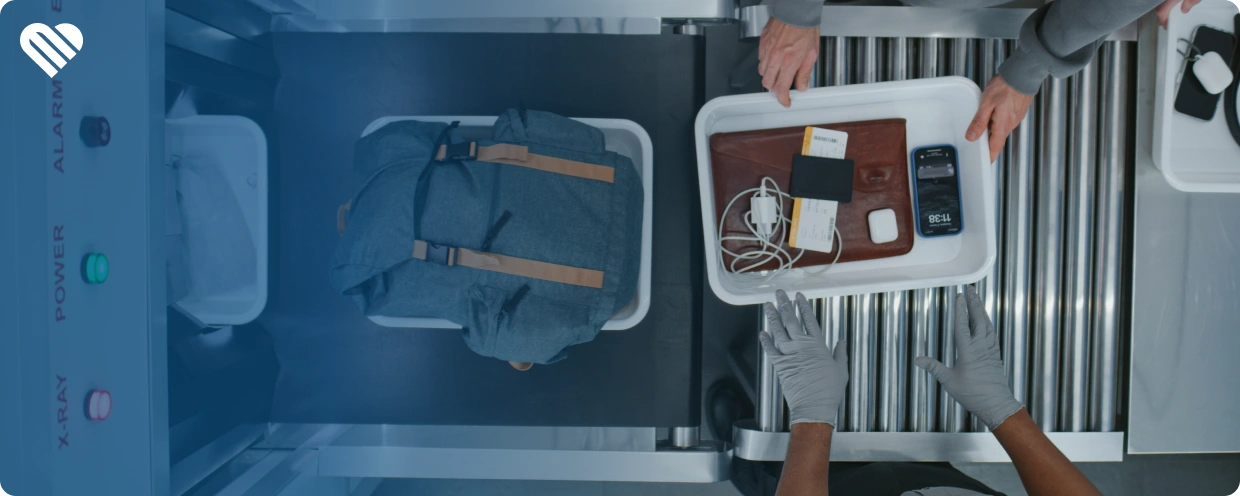
Airport baggage scanning equipment is unlikely to detect cannabis edibles in luggage. Standard X-ray scanners are designed to detect dense objects, metals, and unusual shapes. Edibles are not likely to stand out in these images, especially if they’re gummies, chocolates, or baked goods that look like regular snacks.
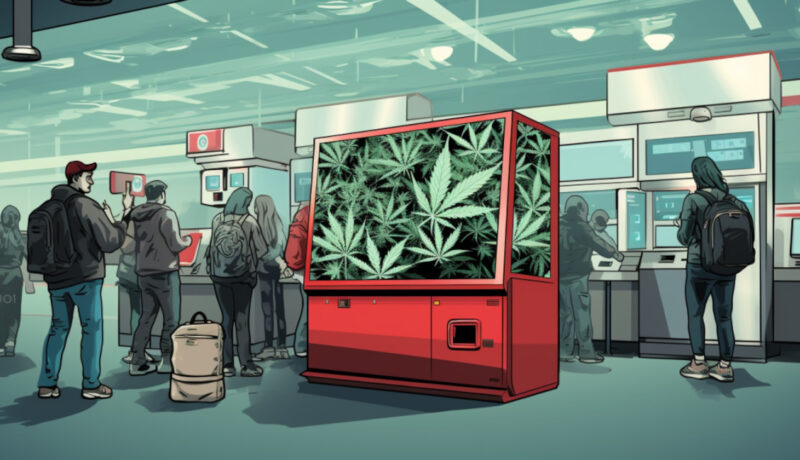
In some airports located in states that have legalized weed, authorities have installed amnesty boxes that allow travelers to securely dispose of cannabis products before they enter the TSA screening line.
Can Drug Dogs Smell Edibles?
TSA canine units at airports are not trained to detect cannabis. The agency’s canine units are instead trained to detect explosives while providing a visible deterrent to terrorists or others who may attempt to interrupt or harm elements of the transportation system.
The U.S. Department of Agriculture also maintains canine units known as the Beagle Brigade at many airports, but these dogs are also unlikely to detect cannabis. They are trained to detect foods, animal products, and agricultural products that may pose a risk to U.S. residents or agriculture. Beagles are known for their ability to discriminate between scents, and cannabis is not one of the plants they are trained to detect.
The Legal Consequences of Flying With Edibles
Flying with cannabis, including edibles, can carry serious legal consequences, whether the products are in your carry-on or checked luggage. Because cannabis remains illegal under federal law, the TSA is obligated to treat it accordingly. Those caught with cannabis at a security checkpoint may be referred to law enforcement.
International travel raises the stakes further. Many countries enforce far stricter drug laws than the U.S., and attempting to bring cannabis across a border can lead to harsh penalties, including prison time. Before you fly, especially overseas, make sure you understand the laws of your destination and all stops in your itinerary.
What Cannabis Patients Can Do Instead of Bringing Edibles on a Plane
Traveling with medical cannabis can be complicated and risky, but there are ways patients can meet their needs when they need to fly. One practical option is to plan trips to states that allow medical cannabis use and recognize out-of-state patients. Several states have reciprocity laws that allow visiting patients to purchase and use medical products legally, though rules vary.
Medical patients may also opt to make their vacation plans so that they visit states that have legalized recreational weed, including cities that have a thriving cannabis culture. In these cities, patients will find a wide selection of retailers and products to meet their needs while they are away from home.
The information in this article and any included images or charts are for educational purposes only. This information is neither a substitute for, nor does it replace, professional legal advice or medical advice, diagnosis, or treatment. If you have any concerns or questions about laws, regulations, or your health, you should always consult with an attorney, physician or other licensed professional.