In This Article
- What Are Minor Cannabinoids?
- Minor vs. Major Cannabinoids
- Complete List of Notable Minor and Acidic Cannabinoids
- CBG (Cannabigerol)
- CBN (Cannabinol)
- CBC (Cannabichromene)
- CBGA (Cannabigerolic Acid)
- CBCA (Cannabichromenic Acid)
- CBDA (Cannabidiolic Acid)
- CBDV (Cannabidivarin)
- THCA (Tetrahydrocannabinolic Acid)
- THCV (Tetrahydrocannabivarin)
- How to Read Product Labels and Lab Tests
- Choosing Products Based on Minor Cannabinoids
Key Takeaways
- Minor compounds like CBG, CBN, and CBC can shape a different experience beyond THC and CBD.
-
Match minor cannabinoids to your goals, like using CBG for focus or CBN for relaxation.
-
Understanding product labels and lab results can help you better choose the cannabis that fits your needs.
Most cannabis consumers have heard of THC and CBD, but those two compounds are only part of the plant’s chemistry. Cannabis naturally produces dozens of other cannabinoids in much smaller amounts, and many may contribute to the overall experience, though research is still evolving.
As testing improves and breeders highlight more of these subtle compounds, understanding the potential effects of minor cannabinoids such as CBG, CBN, and CBC can make it easier to choose the strains and products that feel right for your needs.

What Are Minor Cannabinoids?
In most commercial cannabis, THC- and CBD-type cannabinoids dominate product labels. In raw flower, these typically appear primarily as their acidic forms (THCA and CBDA), which convert to THC and CBD when heated. Minor cannabinoids are the many others that occur naturally at much lower concentrations throughout the plant, including CBG, CBN, CBC, and several others. Some show up early in the plant’s growth, while others form as major cannabinoids age or break down.
Even in small amounts, these cannabinoids may influence a strain’s overall experience. Many also act as precursors in the plant’s natural chemical pathways, eventually converting into the compounds most consumers recognize. As testing becomes more detailed, these less common cannabinoids are easier for labs to identify, giving consumers a clearer sense of what contributes to a product’s effects.
Minor vs. Major Cannabinoids
THC and CBD are considered major cannabinoids because they appear in the highest concentrations in most cannabis plants. They’re also the compounds most responsible for the effects people commonly associate with cannabis, which is why they tend to dominate product labels and strain descriptions.
Minor cannabinoids, on the other hand, occur in much smaller amounts. Compounds like CBG, CBN, and CBC may appear only at trace levels, but they still contribute to the plant’s overall profile.
Some minor cannabinoids serve as precursors that eventually convert into THC, CBD, or other major compounds. CBGA is the most notable example, since it sits at the start of several of the plant’s biochemical pathways.
The key difference comes down to abundance and visibility. Major cannabinoids are easy to measure and widely recognized, while minor cannabinoids often remain in the background unless a product is specifically formulated to highlight them.
As more cultivators and manufacturers focus on these subtle compounds, they’re becoming a more meaningful part of how consumers evaluate strains and products.
Complete List of Notable Minor and Acidic Cannabinoids
CBG (Cannabigerol)
CBGA, the acidic form of CBG, is the key precursor molecule from which several major cannabinoids are synthesized. It’s non‑intoxicating and appears in relatively small amounts in most strains.
CBG is frequently compared to CBD because both are often described by consumers as producing more functional, clear-headed effects. Some consumers describe CBG as steadying or focusing, and early research suggests it may interact with the body in ways that contribute to a balanced experience.
CBN (Cannabinol)
CBN forms when THC breaks down over time, which is why it’s often found in older cannabis. It’s generally considered less intoxicating than THC and is commonly marketed for relaxing or nighttime use, though human research on its specific effects is still developing. CBN interacts with the body differently from THC and doesn’t produce the same type of high. Many consumers describe it as gentler and more calming, and some products highlight it for nighttime use, though research into its specific effects is still in its early stages.
CBC (Cannabichromene)
CBC is a non‑intoxicating cannabinoid that appears early in the plant’s development (in the form of CBCA) and becomes more prominent after decarboxylation. CBC has its own receptor activity, and researchers continue to study how it may interact with other cannabis compounds. Some early findings suggest CBC may contribute to mood or clarity, but its effects are not as well understood as those of THC or CBD.
CBGA (Cannabigerolic Acid)
CBGA is the acidic precursor to several major cannabinoid pathways. Through natural enzymatic processes, it can convert into THCA, CBDA, or CBCA. Because of this central role, it’s sometimes called the “mother cannabinoid.”
CBGA itself is non‑intoxicating and may contribute to the overall experience of raw or minimally heated cannabis, though its direct effects are less documented than those of the cannabinoids it helps create.
CBCA (Cannabichromenic Acid)
CBCA is the acidic form of CBC and appears in the plant before heat or time converts it into its neutral counterpart. Acidic cannabinoids like CBCA are often part of the plant’s early chemical makeup and may have different properties than their decarboxylated forms.
While research on CBCA is still limited, it plays a key role in the plant’s natural pathways and contributes to the chemical profile of raw flower.
CBDA (Cannabidiolic Acid)
CBDA is the acidic precursor to CBD. It’s found in raw or freshly harvested cannabis and converts into CBD when exposed to heat through decarboxylation. CBDA interacts with the body differently from CBD and may have distinct potential effects.
Early laboratory and animal research has explored its potential influence on mood and nausea pathways, though clinical evidence remains limited.
CBDV (Cannabidivarin)
CBDV is structurally similar to CBD but appears in much smaller amounts. It’s typically present in low concentrations, though some chemovars have been bred for higher levels. CBDV is non‑intoxicating and has been the focus of early research into areas such as mood, seizures, and inflammation, though none of these findings are definitive. Like CBD, CBDV may contribute to a strain’s overall feel without producing a high.
THCA (Tetrahydrocannabinolic Acid)
THCA is the acidic precursor to THC. It is non‑intoxicating in its raw form and only converts into THC when heated. Early preclinical research has explored possible anti-inflammatory and neuroprotective properties, though human data remain limited.
THCA often appears prominently in lab results for flower because it represents the majority of the THC that will become active once the product is smoked, vaped, or cooked.
THCV (Tetrahydrocannabivarin)
THCV is a naturally occurring cannabinoid found in small amounts in most strains, though some cultivars produce higher levels. It’s structurally similar to THC but interacts with the body differently, which can lead to a distinct set of potential effects.
Early research has explored THCV’s possible influence on appetite, energy, and focus, and some consumers describe it as clear‑headed or stimulating, though effects appear to vary by dose and individual response. Its effects can vary depending on dose and the presence of other cannabinoids.
How to Read Product Labels and Lab Tests
Understanding product labels and lab results can make it much easier to choose cannabis that fits your needs. Most legal products come with a certificate of analysis (COA), which lists the cannabinoids and terpenes detected during testing. While THC and CBD usually take center stage, many COAs also include minor cannabinoids when they appear in measurable amounts.
Not every product will list every cannabinoid. Some minor cannabinoids occur in such small concentrations that they fall below the lab’s reporting threshold. Others may only appear in certain product types, such as raw flower, live resin, or tinctures, which are made to highlight specific compounds. If a product is formulated to feature CBG, CBN, CBC, or another minor cannabinoid, it will usually be listed clearly on the label.
THCA is one of the most common cannabinoids you’ll see on a COA for flower. Because THCA converts into THC when heated, labs often report both the THCA percentage and the estimated total THC after decarboxylation. This helps consumers estimate how potent the product will feel once it’s smoked or vaporized. The same principle applies to CBDA and other acidic cannabinoids, which convert to their neutral forms when heated.
Some labels include TAC, often used to mean total measured cannabinoids. However, terminology and calculations can vary by lab, and ‘TAC’ can also refer to Total Aerobic Count in microbial testing, so it’s worth checking the context on the COA.
Learning how to read these numbers can help consumers look beyond THC percentage alone. A product with moderate THC but higher levels of CBG, CBN, CBC, or other minor cannabinoids may feel different for some consumers compared to a high-THC product with fewer detectable supporting cannabinoids.
Choosing Products Based on Minor Cannabinoids
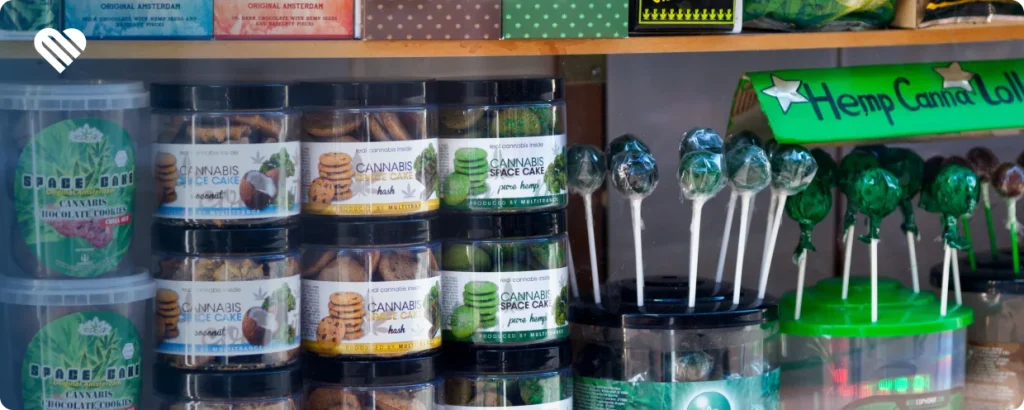
Minor cannabinoids can play a meaningful role in how a product feels, so paying attention to them can help consumers make more informed choices. Flower, vapes, tinctures, and edibles all vary in how prominently these compounds appear, and some products are formulated specifically to highlight cannabinoids like CBG, CBN, CBC, or THCV.
When choosing flower, looking at the full cannabinoid profile can offer more insight than THC percentage alone. A strain with moderate THC but higher levels of CBG or CBC may feel more intense than a high‑THC strain with very few supporting cannabinoids. Additionally, flower exposed to oxygen, heat, or light over time may show increased CBN levels due to THC degradation.
Vape cartridges and concentrates often list a broader range of cannabinoids on their packaging. These products can be a good option for consumers who want to explore specific minor cannabinoids, since manufacturers sometimes formulate them to feature compounds like CBG, CBN, or THCV more prominently. Tinctures and oils offer even more control, with some products designed around a particular cannabinoid ratio.
Edibles tend to focus on THC and CBD, but some brands now include minor cannabinoids to shape the overall experience. Because edibles are processed differently by the body, their effects can feel distinct from inhaled products, even when the cannabinoid ratios are similar.
No matter the product type, it’s helpful to start with lower doses and pay attention to how different cannabinoid combinations feel. Everyone responds differently, and exploring a range of profiles can help you find products that match your goals, whether you’re looking for clarity, calm, focus, or a more balanced experience.
The information in this article and any included images or charts are for educational purposes only. This information is neither a substitute for, nor does it replace, professional legal advice or medical advice, diagnosis, or treatment. If you have any concerns or questions about laws, regulations, or your health, you should always consult with an attorney, physician or other licensed professional.