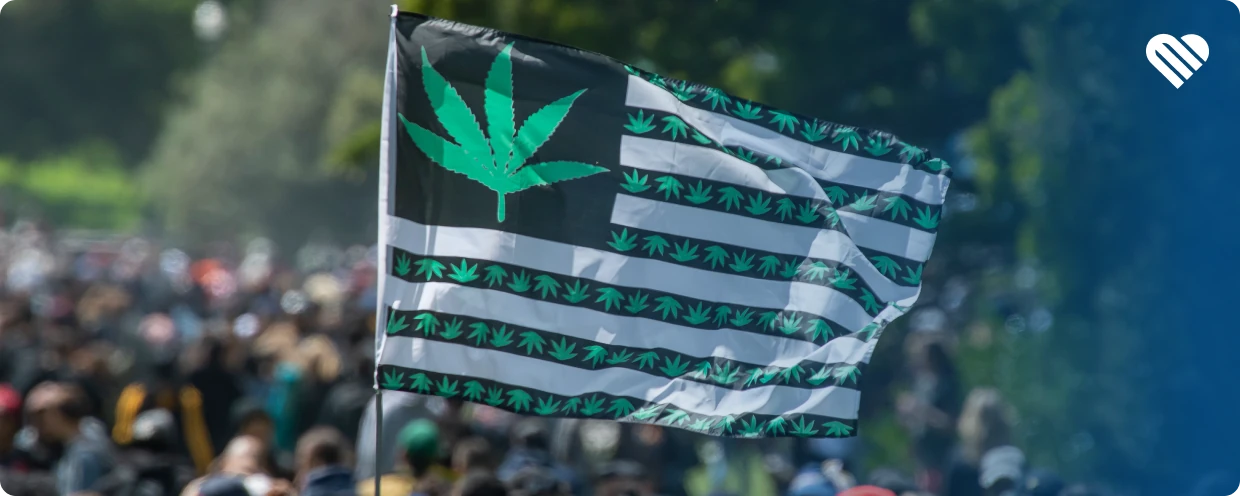
Key Takeaways About the 420 Holiday
- The 420 holiday began as a simple after-school code used by California teens in the 1970s.
- It spread through music culture and cannabis media before becoming a global event.
- Today, 4/20 is part celebration, part activism, and one of the biggest sales days in the cannabis industry.
For years, the origins of the 420 holiday were a little hazy.
Some people insisted 420 was a police code for marijuana possession. Another claims cannabis contains 420 chemicals. Others pointed to “Rainy Day Women #12 & 35” by Bob Dylan, noting that 12 times 35 equals 420, which felt like too perfect a coincidence to ignore. After all, the song famously repeats the line “Everybody must get stoned.”
None of those explanations turned out to be true.
In reality, the story began with five high school guys who just liked to hang out after school. And yes, weed was involved.

Origins of 420
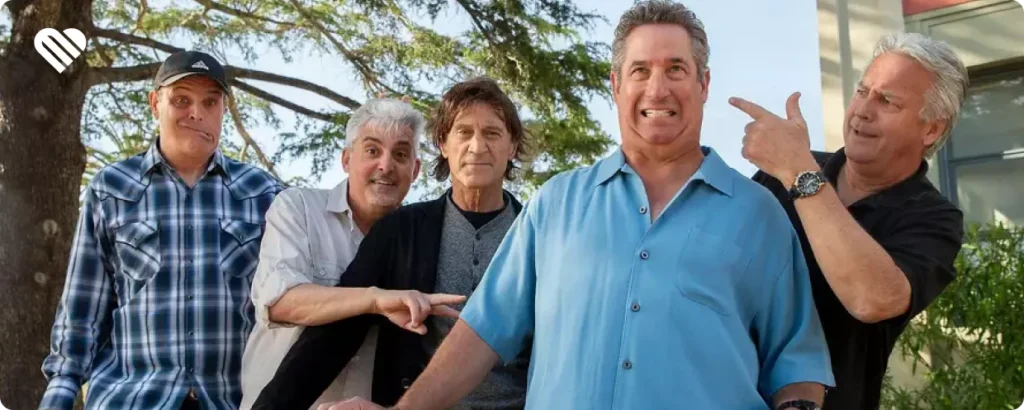
Credit: Santiago Mejia / The Chronicle
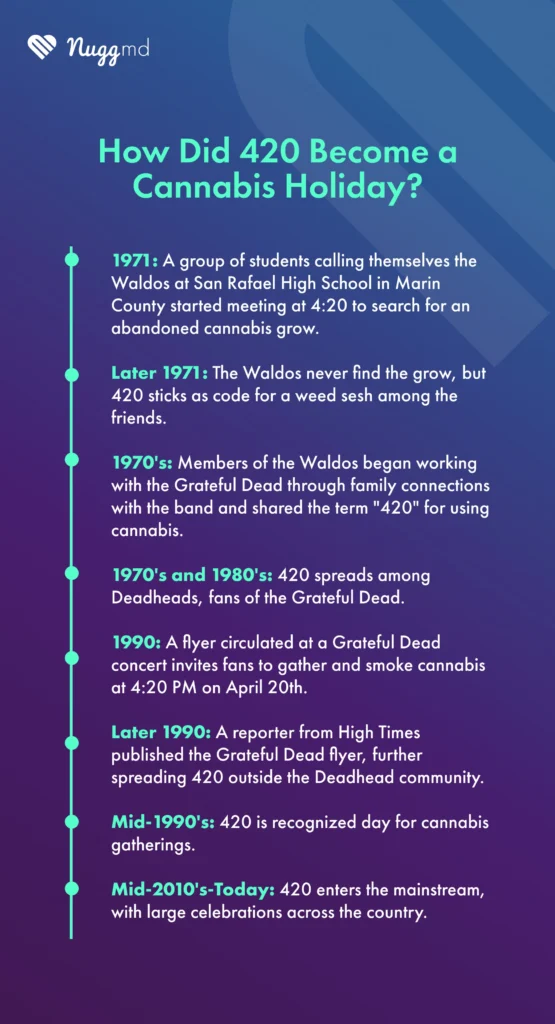
The origin of 420 traces back to 1971 in Marin County, California.
Five San Rafael High School friends met daily after school to smoke a joint together. The meeting place: a campus statue of French chemist Louis Pasteur. The meeting time: 4:20, after school activities ended. These five guys called themselves the Waldos, since they sat on the wall near the statue. As a code, they used the phrase “420 Louis” to confirm their plan to meet at the statue at the designated time.
The rest of the story is how this high school crew and their daily sesh became part of history.
In the fall of 1971, the Waldos learned of a guerrilla grow, a stash of cannabis plants secretly growing in the San Reyes Forest. As the story goes, a hand-drawn map of the location came from a Coast Guard member who abandoned the crop to avoid getting caught.
The Waldos accepted the challenge. On the days of the hunt (they called it a safari), as they passed each other in the school hallways, the code 420 Louie (and eventually just 420) signaled that the hunt was on for the day.
They never did find the stash. But the code for a weed sesh, 420, stuck.
The story of 420 could have ended here. But it didn’t.
How 420 Spread
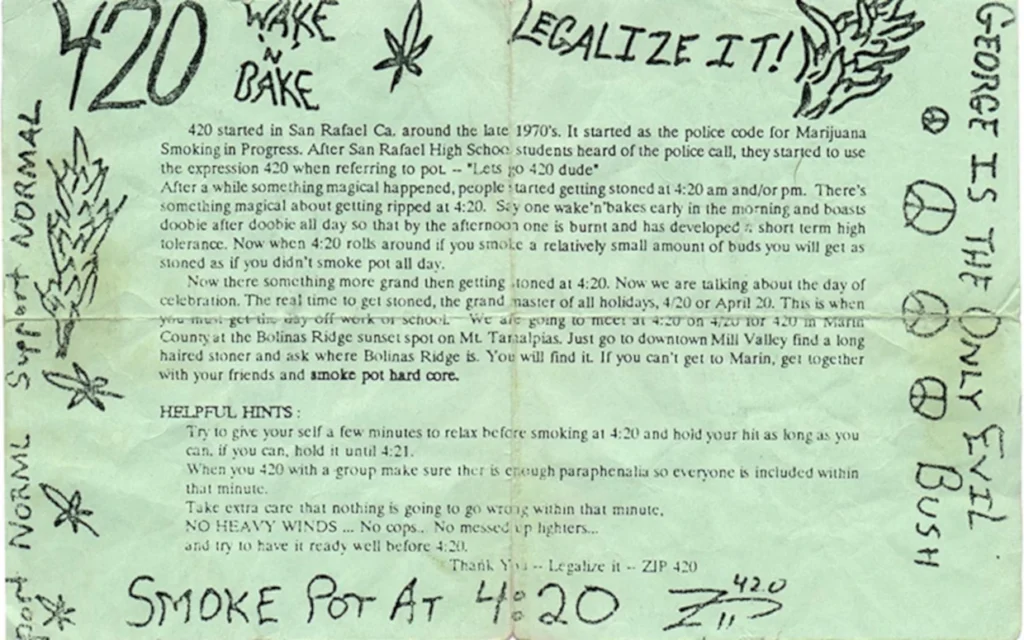
The phrase might have stayed local if not for its connection to the Grateful Dead community.
Two of the Waldos had family ties to the Grateful Dead and open access to the band. Their 420 code for cannabis spread among the band and Deadheads, fans who ardently followed the band cross-country.
In 1990, a flyer at a Grateful Dead concert invited people to gather and smoke weed at 4:20 p.m. on April 20.
A reporter from High Times later published the flyer, and the 420 culture grew.
Cannabis magazines picked it up. College students joined in. Early internet forums adopted 420 as the underground shorthand for cannabis use.
What started as a convenient time to meet after school grew into an homage for the plant, the date of April 20, and the number 420 as shorthand for embracing the spirit of cannabis.
By the mid-1990s, April 20 had become a recognized day for cannabis gatherings.
420 in Popular Culture
Today, 420 is a universal badge for cannabis culture. Once you look for it, you’ll notice it in movies and TV, social media posts at 4:20, memes and #420 hashtags, and even references in non-cannabis marketing and branding.
Gatherings, large and small, celebrate all things cannabis on April 20.
Less than 20 miles from the Louis Pasteur statue where the Waldos met, thousands gather each year at Hippie Hill in Golden Gate Park in San Francisco to celebrate 420. Similar events popped up in cities across the United States and Canada, turning 4/20 into an unofficial holiday for cannabis culture.
Another sign of how mainstream 420 has become is the phrase “420-friendly.” What started as a quiet way to signal cannabis acceptance is now commonly used in online listings, social profiles, and even vacation rentals. Today, seeing “420-friendly” usually means cannabis use is welcome or at least tolerated, something that wasn’t openly advertised just a couple of decades ago.
What started as a code became a signal. And if you know, you know.
The Current State of the 420 Holiday
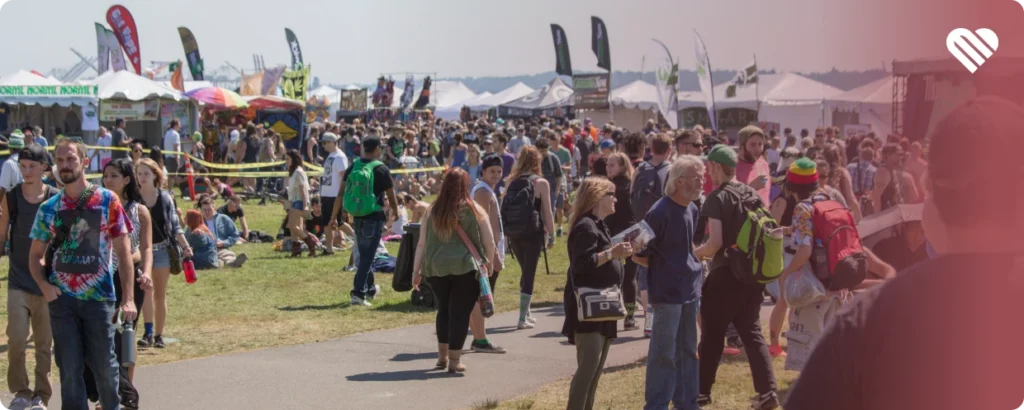
Today, the 420 holiday wears different party hats. It’s a celebration, a call for change, and the largest retail sales day for cannabis and cannabis products ($180 million in sales in 2024).
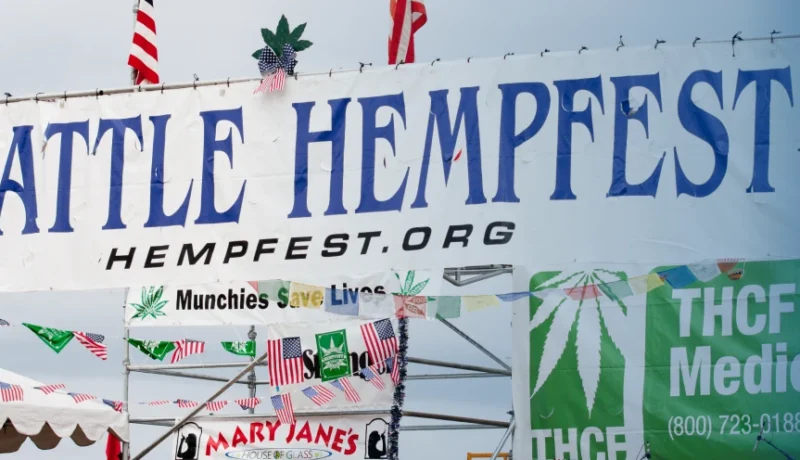
For many people, 4/20 is simply about enjoying cannabis with friends. Some opt for a small group hang or a relaxed sesh. Others enjoy large public events. In some cities, these gatherings have grown into major festivals. Events like the Mile High 420 Festival in Denver bring together music, vendors, large crowds and cannabis culture on a much larger scale.
At the same time, 420 still carries roots in activism. For years, April 20 gatherings doubled as protests calling for legalization. Many events continue to highlight issues like expungement of past cannabis convictions, fair access to the legal market, and ongoing federal restrictions.
In legal cannabis markets, 4/20 has also become one of the biggest sales days of the year. Dispensaries often offer storewide discounts, bundle deals, and limited-time products. For budget-conscious consumers, this can be one of the best times of year to save money on cannabis.
Why 420 Still Matters
The story of 420 reflects how much cannabis culture has changed.
What started as a private code among a handful of teenagers is now widely recognized by consumers, businesses, and media alike. Over time, it spread through underground culture to become a global celebration held every April 20. At the same time, cannabis laws are still evolving. Not everyone has equal access, and full federal legalization has yet to happen.
The story of 420 mirrors the broader evolution of cannabis itself.
The information in this article and any included images or charts are for educational purposes only. This information is neither a substitute for, nor does it replace, professional legal advice or medical advice, diagnosis, or treatment. If you have any concerns or questions about laws, regulations, or your health, you should always consult with an attorney, physician or other licensed professional.