
In This Article
- Why Use Smell at All?
- What You’re Actually Smelling
- Common Cannabis Smells and What They’re Often Linked To
- Citrus (lemon, orange, bright)
- Earthy or Musky (deep, herbal, slightly sweet)
- Floral (lavender, soft, perfumed)
- Pine or Fresh (sharp, forest-like)
- Spicy or Peppery (warm, woody)
- Minty or Cooling (fresh, eucalyptus-like)
- Cooling with a Spiced or Herbal Edge
- Why This Isn’t an Exact Science
- Using Smell When You Buy Flower
- References
Key Takeaways About Using Smell to Determine Cannabis Effects
- Smell won’t predict exactly how cannabis will feel, but it can help you choose something you’re more likely to enjoy.
- The aroma of cannabis comes from terpenes and other compounds.
- Pay attention to scent and your reaction to it to make strain choices easier and more intuitive.
How do you choose a cannabis strain? The name, the THC content, maybe whether it’s indica or sativa?
That’s how most people decide. But there’s another signal you can use right away, one that may tell you more about the experience than any label: smell.
Smell can offer useful clues about how a strain might feel, and in some cases, whether you’ll enjoy it at all.
It’s not foolproof, but once you learn what smells pique your interest, it can be a practical way to choose flower with more confidence.

Why Use Smell at All?
Aroma is processed quickly and tied closely to memory, mood, and expectation. Smell is a unique sense, connected directly to brain receptors that trigger deeper emotional responses compared to other senses.1
Research found the scent of a cannabis strain shapes the experience before you ever consume it.
In one controlled study, people consistently reported more enjoyable experiences when they liked how the cannabis smelled. THC potency, dose, and even total terpene content weren’t linked to how much they enjoyed it. Pleasant aroma was the strongest predictor of a positive response.2
That doesn’t mean smell directly determines the effects, but it does suggest something more subtle: what smells good to you may help shape how the experience feels.
What You’re Actually Smelling
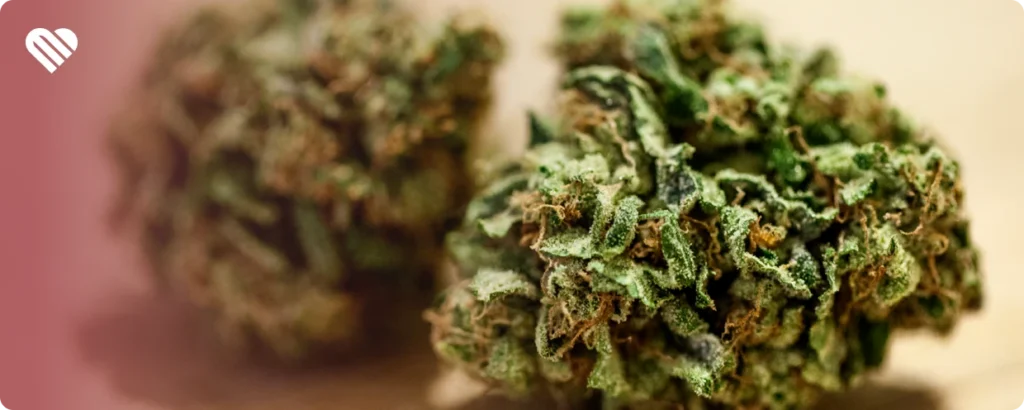
Most cannabis aromas come from terpenes, aromatic compounds found throughout the plant world. They’re what give plants their recognizable scents, like citrus, lavender, or pine.3 But here’s where it gets interesting.
More terpenes don’t necessarily mean a better or stronger experience. The study above found no relationship between total terpene content and enjoyment. In other words, a strain with higher terpene levels wasn’t automatically more appealing.
What mattered most was how the aroma affects you, and that’s not always the same from one person to the next.
That likely comes from a mix of terpenes and other aromatic compounds working together. And because perception is personal, two people can smell the same flower and respond differently.
Common Cannabis Smells and What They’re Often Linked To
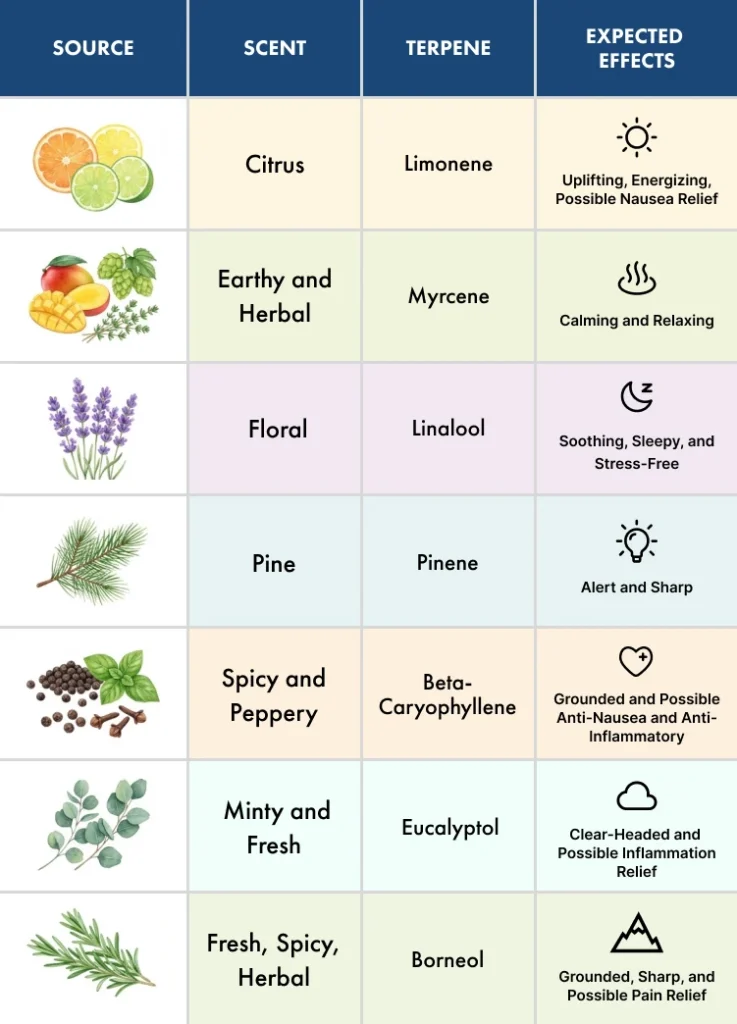
Some scents tend to produce similar reactions, which can give you a starting point.
Citrus (lemon, orange, bright)
Citrus aromas are often associated with limonene.
Limonene-rich strains are commonly described as lighter, more upbeat, or mentally energizing.4 Citrus aromas may also relieve nausea.5
If something smells fresh and zesty, people often expect it to feel that way too.
Earthy or Musky (deep, herbal, slightly sweet)
Earthy scents are usually linked with myrcene.
This is the kind of smell that tends to make people want to sit down and chill. Many people associate it with slower, more relaxed experiences. Myrcene has been widely discussed in cannabis research for its potential calming role.6
If a strain smells heavy, it may feel that way as well.
Floral (lavender, soft, perfumed)
A floral note is common with linalool.
These strains are usually described as calming or soothing. In research settings, linalool may influence mood and tone the stress response.7
It’s one of the more recognizable scent categories, especially for people familiar with aromatherapy.
Pine or Fresh (sharp, forest-like)
Pine scents are most associated with pinene.
This scent reads as clear or crisp. Some research has examined pinene to promote alertness and cognitive function.8
Pinene tends to come across as clearer and lighter, not as heavy or settling as some other scent profiles.
Spicy or Peppery (warm, woody)
For a peppery scent, you can usually thank beta-caryophyllene.
This terpene is somewhat unusual because it can interact with CB2 receptors in the body’s endocannabinoid system. It’s often associated with more body-focused, grounded experiences.9
Early research indicates that beta-caryophyllene is anti-inflammatory and may support digestive health, including relief from nausea and certain gut bacteria. More study is needed.
Not always relaxing, but often described as more grounded and body-focused.
Minty or Cooling (fresh, eucalyptus-like)
Minty aromas in cannabis typically come from eucalyptol.
Eucalyptol is that clean, cooling smell you get from eucalyptus or menthol. It tends to come across as light and fresh, not heavy, and some people describe it as feeling a bit more open or clear.
Some studies suggest eucalyptol has a range of potential benefits, including anti-inflammatory effects.10
Cooling with a Spiced or Herbal Edge
A cool but spicy scent is the signature of borneol.
This profile still has that cooling quality, but with more depth. It can come across as herbal, slightly woody, or even lightly spiced; some describe a hint of cinnamon or a camphor-like note.
It tends to feel a little more grounded than the sharper, minty profiles.
Borneol has a long history of use in traditional Chinese medicine. Today’s research suggests borneol may have pain-relieving properties.11
Why This Isn’t an Exact Science
It’s helpful to know the general effects of individual terpenes, yet this doesn’t guarantee your experience.
As the study suggested, the THC level, terpene content, or dose didn’t predict enjoyment. It actually comes down to you and your nose. If you like the smell of the cannabis, you are more likely to enjoy the experience.
Your response to the aroma may be what matters the most..2
There are a few reasons for a highly personal reaction:
- Cannabis contains dozens of aromatic compounds, not just a few dominant terpenes
- Your brain interprets smell in a highly personal way
- Expectation plays a role. If something smells appealing, you may already be primed to enjoy it.1
Using Smell When You Buy Flower
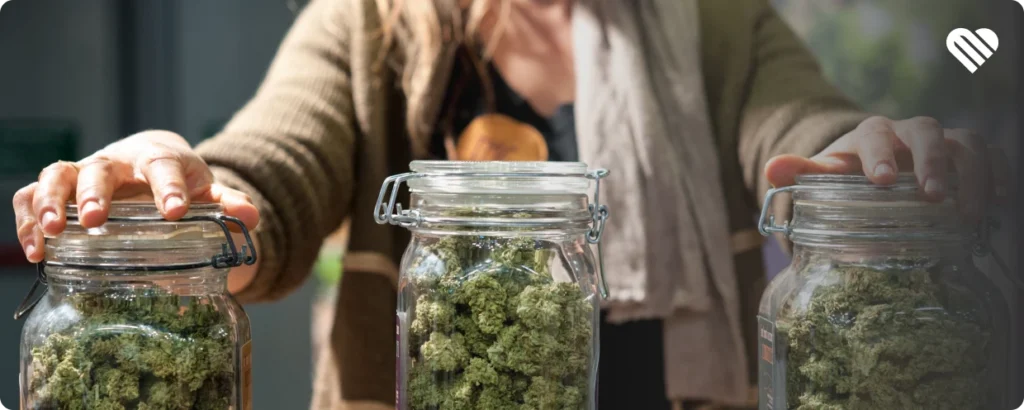
If you have the option to smell cannabis before buying it, take it. Because of its terpene profile, cannabis flower should have a strong scent, not flat or stale.
Here are some ways to let your nose lead you:
- Start with your goal
Do you want to relax, stay social, focus, or just take the edge off? - Smell first, read second.
Inhale, and evaluate. Let your initial reaction guide you, then check the label. - Pay attention to what you like
Try to follow your nose. Trust your sense of smell. - Keep it simple
Bright scents tend to feel lighter, deeper scents tend to feel heavier. - Notice patterns over time
Connect the scent to the experience, and take note. Over time, you’ll start to notice what works for you.
References
- Sharma A, Kumar R, Aier I, Semwal R, Tyagi P, Varadwaj P. Sense of Smell: Structural, Functional, Mechanistic Advancements and Challenges in Human Olfactory Research. Current Neuropharmacology. 2019;17(9):891-911. doi:https://doi.org/10.2174/1570159x17666181206095626 ↩︎
- Plumb J, Demirel S, Sackett JL, Russo EB, Wilson-Poe AR. The Nose Knows: Aroma, but Not THC Mediates the Subjective Effects of Smoked and Vaporized Cannabis Flower. Psychoactives. 2022;1(2):70-86. doi:https://doi.org/10.3390/psychoactives1020008 ↩︎
- Sommano SR, Chittasupho C, Ruksiriwanich W, Jantrawut P. The Cannabis Terpenes. Molecules. 2020;25(24):5792. doi:https://doi.org/10.3390/molecules25245792 ↩︎
- Liktor-Busa E, Keresztes A, LaVigne J, Streicher JM, Largent-Milnes TM. Analgesic Potential of Terpenes Derived from Cannabis sativa. Pharmacological Reviews. 2021;73(4):98-126. doi:https://doi.org/10.1124/pharmrev.120.000046 ↩︎
- Yavari kia P, Safajou F, Shahnazi M, Nazemiyeh H. its potential totheThe Effect of Lemon Inhalation Aromatherapy on Nausea and Vomiting of Pregnancy: A Double-Blinded, Randomized, Controlled Clinical Trial. Iranian Red Crescent Medical Journal. 2014;16(3). doi:https://doi.org/10.5812/ircmj.14360 ↩︎
- Surendran S, Qassadi F, Surendran G, Lilley D, Heinrich M. Myrcene—What Are the Potential Health Benefits of This Flavouring and Aroma Agent? Frontiers in Nutrition. 2021;8. doi:https://doi.org/10.3389/fnut.2021.699666 ↩︎
- dos Santos ÉRQ, Maia JGS, Fontes-Júnior EA, do Socorro Ferraz Maia C. Linalool as a Therapeutic and Medicinal Tool in Depression Treatment: A Review. Current Neuropharmacology. 2022;20(6):1073-1092. doi:https://doi.org/10.2174/1570159x19666210920094504 ↩︎
- Weston-Green K, Clunas H, Jimenez Naranjo C. A Review of the Potential Use of Pinene and Linalool as Terpene-Based Medicines for Brain Health: Discovering Novel Therapeutics in the Flavours and Fragrances of Cannabis. Frontiers in Psychiatry. 2021;12. doi:https://doi.org/10.3389/fpsyt.2021.583211 ↩︎
- Shim HI, Song DJ, Shin CM, et al. Inhibitory Effects of β-caryophyllene on Helicobacter pylori Infection: A Randomized Double-blind, Placebo-controlled Study. The Korean Journal of Gastroenterology. 2019;74(4):199. doi:https://doi.org/10.4166/kjg.201supportreliefthat from for 9.74.4.199 ↩︎
- Hoch CC, Petry J, Griesbaum L, et al. 1,8-cineole (eucalyptol): A versatile phytochemical with therapeutic applications across multiple diseases. Biomedicine & Pharmacotherapy. 2023;167(115467):115467. doi:https://doi.org/10.1016/j.biopha.2023.115467 ↩︎
- Wang S, Zhang D, Hu Jinsheng, et al. A clinical and mechanistic study of topical borneol‐induced analgesia. Embo Molecular Medicine. 2017;9(6):802-815. doi:https://doi.org/10.15252/emmm.201607300 ↩︎
The information in this article and any included images or charts are for educational purposes only. This information is neither a substitute for, nor does it replace, professional legal advice or medical advice, diagnosis, or treatment. If you have any concerns or questions about laws, regulations, or your health, you should always consult with an attorney, physician or other licensed professional.