




The History of Cannabis in the US: The Dark Ages (Cannabis Gets Outlawed)
From a staple of industrialized life to vilification, we examine what led to the sea of change in hemp's social perception and public policy. Pt 2 of 5.
4.7 out of 12k+ reviews
The federal government now recognizes the medicinal value of cannabis. Read on to learn about the path to rescheduling, or connect with a doctor in as little as 15 minutes and find out if medical cannabis can work for you.
To celebrate Schedule 3, we’re donating 3% of our revenue to NORML from Jul 12 – 18. Learn how NORML is defending patient rights, what rescheduling means for you, and how you can take action today.
NORML’s Paul Armentano explains what rescheduling means (and doesn’t mean) for patients.
NORML has been working to reform marijuana laws since 1970. And their work isn’t done.
Rescheduling doesn’t mean equal access or patient protections. Your support makes a difference.
Find a local NORML chapter to become a citizen-advocate and help drive change near you.
We dig deeper into the implications of rescheduling with Paul Armentano, NORML Deputy Director.
Medical cannabis rescheduling won’t solve every problem. But it’s a step in the right direction.
Medical cannabis evaluation, now 20% off!
From a staple of industrialized life to vilification, we examine what led to the sea of change in hemp's social perception and public policy. Pt 2 of 5.

Barely 30 years after it was outlawed, the counterculture movement planted the first seeds for cannabis acceptance and re-legalization. Pt 3 of 5.
Cannabis has yet to be legalized at the federal level, but 38 states allow medicinal use, while 24 states have legalized recreational use. Pt 5 of 5.
We explore the causes and symptoms of epilepsy and whether cannabis or cannabinoids like CBD may be an effective component in your treatment routine.
What is chronic pain? We explore the causes, symptoms, and whether cannabis may be an effective component in treating chronic pain.
We explore the causes and symptoms of cachexia, or wasting syndrome, and whether cannabis may be an effective component in your treatment routine.
Follow the winding path cannabis has taken from 12,000 BC to prohibition to the modern era.
Millions arrested, billions of taxpayer dollars spent, and decades behind in medical research.
Dedicated to every patient who sought relief while the federal government called their medicine illegal.
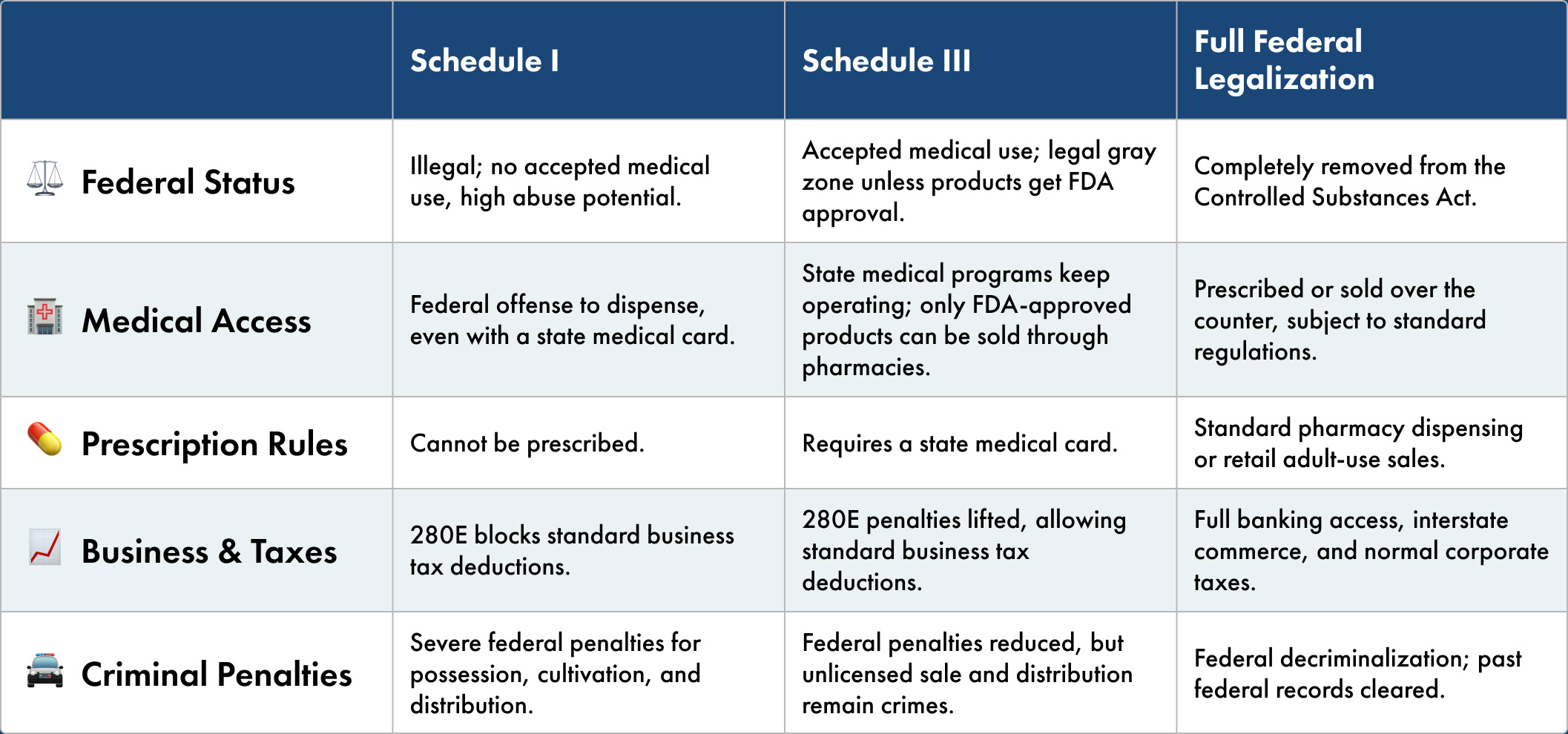
Moving medical cannabis to Schedule III was the biggest cannabis policy change in decades. But it’s a far cry from descheduling. Learn more about what rescheduling really means for patients.
While medical cannabis has been moved to Schedule III, many businesses and patients have unanswered questions. How will rescheduling affect patient rights? Will it be easier to access cannabis? Do you need a med card to buy cannabis now? Will prices go down for consumers?
We dig in to what rescheduling means (and doesn’t mean) for patients.
With federal rescheduling of medical cannabis and state-specific regressive policies threatening adult-use markets, getting a medical card may more beneficial today than ever. Patients are on the precipice of greater access, lower prices, and better legal protections. Find out why many consumers choose to get a med card even in an adult-use state.
The Supreme Court’s 2026 ruling declared cannabis consumers cannot be denied their second amendment rights solely on the basis of using cannabis. Learn more about your rights as a cannabis consumer and gun owner.
Market pressures have led many adult-use dispensaries to focus on high-THC products, at the exclusion of high CBD, 1:1, minor cannabinoid, and microdose options that many patients are looking for. We look at why many recreational dispensaries are failing consumers (and how you can find the right products for your personal wellness goals).
Just because medical cannabis has been rescheduled, and regardless of the outcome of the Jun-Jul 2026 rescheduling hearings, our work isn’t done. Find out how you can get involved in cannabis reform efforts that are helping increase patient protections and consumer access across the U.S.
Cannabis consumers have been the subject of stereotypes and discrimination for decades, and many prohibitionist groups are doubling down during the modern rescheduling era. Learn more about organizations like NORML that are standing up for consumer rights.