In This Article
- How Medical Cannabis Approval Usually Works
- Most Common Reasons You Might Be Denied a Medical Card
- 1. You Don’t Meet Your State’s Qualifying Conditions
- 2. Firearm Ownership and Federal Law Conflicts
- 3. Your Application Paperwork is Incomplete or Incorrect
- 4. You Don’t Meet Age or Residency Requirements
- 5. The Clinician Doesn’t Think Cannabis is Appropriate or Safe for You Right Now
- 6. Legal or Program Issues in Your State
- What Can You Do to Increase Your Chances of Getting a Med Card?
- 1. Check Your State’s Requirements Before You Book
- 2. Gather Your Medical Records and a Simple Symptom Log
- 3. Make Sure Your Paperwork and ID are Ready
- 4. Be Honest About Your Health History and Cannabis Use
- 5. Choose a Cannabis-Friendly, Experienced Clinician
- 6. Understand the Pros and Cons Before You Apply
- When Trying Again Soon Makes Sense
- When It’s Better to Pause and Regroup
- Is It Okay to Get a Second Opinion?
- Renew Your Card
Key Takeaways About Reasons You May Be Denied a Med Card
- Most medical cannabis denials come down to a few avoidable issues: not meeting your state’s qualifying conditions, missing documentation, or paperwork problems.
- Avoid a denial by preparing ahead. Check your state rules, gather medical records, and choose a cannabis-friendly clinician.
- If you’re denied, it’s often still possible to qualify later by fixing paperwork issues, updating your medical records, or seeking a second opinion.
For most patients, getting a medical cannabis card is a straightforward process. For those new to the process, it can also be helpful to understand how it works to avoid common pitfalls, like not having a qualifying condition, conflicts with gun ownership, and incomplete documents.
Every state sets its own medical cannabis rules. Federal law can also affect how some aspects of medical cannabis are handled, even in states where it is legal. Always check your state program’s website for the most accurate and up-to-date details.
How Medical Cannabis Approval Usually Works
There are two main steps to getting your medical marijuana card.
- First, you meet with a licensed clinician who evaluates your medical history and symptoms to decide if you meet the state’s medical requirements.
- Once approved, your clinician submits a recommendation or certification, and you (or the clinic) send an application to your state program for the actual card.
Most denials happen at one of these two steps, and they usually fall into a few predictable categories.
Most Common Reasons You Might Be Denied a Medical Card
1. You Don’t Meet Your State’s Qualifying Conditions
This is one of the top reasons people are denied. Every state with a medical cannabis program publishes a list of diagnoses or symptom categories that can qualify. Examples often include:
- Cancer or treatment-related side effects
- Chronic or severe pain
- Severe nausea, especially related to treatment
- Seizure disorders
- Multiple sclerosis or similar neurological conditions
- PTSD or other chronic, debilitating mental health conditions
These qualifying conditions vary by state. Your state cannabis regulatory agency can provide a list. However, you might be denied if:
- Your condition isn’t on your state’s list or comparable to a listed condition.
- Your symptoms are temporary or mild, and not deemed by the clinician as “chronic” or “debilitating.”
- You’re seeking cannabis for a reason that’s clearly not covered (for example, casual or purely recreational use).
2. Firearm Ownership and Federal Law Conflicts
Federal law currently treats cannabis use differently from how state medical cannabis programs do. Even in states where medical cannabis is legal, cannabis remains illegal at the federal level.
Because of this conflict, federal law places restrictions on firearm ownership for people who use cannabis, including medical cannabis patients. Clinicians will likely ask if you own or plan to purchase a firearm. If you do, you will not qualify for medical cannabis. You may not legally own a firearm and be a medical cannabis patient at the same time.
This issue is not about state medical eligibility and does not reflect a judgment about a patient’s health or character. It is a federal legal conflict that is actively being challenged and debated at the Supreme Court level. States like Texas have pushed back on this issue, but federal law has not yet changed.
3. Your Application Paperwork is Incomplete or Incorrect
Sometimes you do qualify medically, but your state application gets rejected on technicalities, such as:
- Missing signatures or pages
- An expired driver’s license or ID
- Mismatched names or addresses
- Missing or incorrect fees
- Uploading the wrong file type or unreadable scans
The good news: these are usually fixable. The bad news: simple errors can still delay your card.
4. You Don’t Meet Age or Residency Requirements
Most states require that you live in the state you are applying to and provide proof of residency, such as a state driver’s license or state ID.
Age can also matter. In many states, patients must be 18 or older to apply independently. Younger patients may still qualify, but typically need a parent or legal guardian to consent and often serve as a designated caregiver.
If a minor applies without proper parental consent or caregiver documentation, the clinician or state can deny the request.
5. The Clinician Doesn’t Think Cannabis is Appropriate or Safe for You Right Now
Even if you technically qualify, the evaluating clinician can still say no if they believe cannabis isn’t a good fit for your medical situation. Reasons might include:
- A history of certain serious mental health conditions, especially psychotic disorders, that could be worsened by THC
- Unstable or severe substance use issues that make the clinician concerned about misuse
- Uncontrolled cardiovascular issues or other serious health concerns where cannabis might add risk
- Pregnancy or breastfeeding, where safety data for cannabis is limited
Many medical marijuana doctors believe cannabis can help with symptoms like pain or anxiety. However, they may still have concerns about side effects, mental health risks, or limited long-term data. It’s frustrating, but your safety comes first, so they might ask you to stabilize another condition, try a standard treatment first, or they may simply not feel comfortable recommending cannabis.
6. Legal or Program Issues in Your State
In some states, specific legal or program issues can lead to denial, such as:
- Specific types of recent violent or drug-related convictions
- Previous fraud related to medical cannabis or falsified recommendations
- Conflicting or false information on your application
This doesn’t mean a criminal record always disqualifies you. Checking your state’s official rules (or talking with an attorney for legal questions) is the best way to know what applies to you.
What Can You Do to Increase Your Chances of Getting a Med Card?
1. Check Your State’s Requirements Before You Book
Before you schedule a visit:
- Visit your state’s official medical cannabis program website.
- Look up the qualifying conditions and any notes about what “chronic” or “debilitating” means.
- Check age, residency, and ID requirements.
Many state lists include broad categories like chronic pain, severe nausea, or other long-lasting symptoms. If your exact diagnosis isn’t included, you may have a path to qualify based on symptoms that overlap with a qualified condition. Still, your symptoms need to be documented in your medical records.
2. Gather Your Medical Records and a Simple Symptom Log
Before your appointment, try to collect:
- Recent visit summaries from your primary care or specialist
- Any relevant imaging or lab reports
- A list of current medications and past treatments you’ve tried
This gives your clinician a clearer picture of your condition.
3. Make Sure Your Paperwork and ID are Ready
Take a minute before you hit “submit” on any application to:
- Double-check that your ID is valid and not expired.
- Confirm your name and address match your application.
- Review every page of your application for signatures, dates, and uploads.
A quick review up front can prevent a preventable denial later.
4. Be Honest About Your Health History and Cannabis Use
It can be tempting to downplay some details or emphasize others. Being honest helps your clinician keep you safer and often helps your case.
Be open about:
- Your full health history, including mental health and substance use
- Any side effects you’ve had from cannabis or other medications
- What you’re hoping cannabis will help with
Clinicians are often more comfortable certifying patients when they understand the whole picture and can document a clear, medically reasonable plan.
5. Choose a Cannabis-Friendly, Experienced Clinician
Not every doctor can certify or recommend cannabis. In most states, they are required to complete additional mandatory training. Also, not every doctor is comfortable recommending cannabis, even if your state allows it.
If your regular doctor is hesitant, you might:
- Ask whether they’re open to discussing medical cannabis in the future
- Request copies of your records to share with a clinician who does perform evaluations
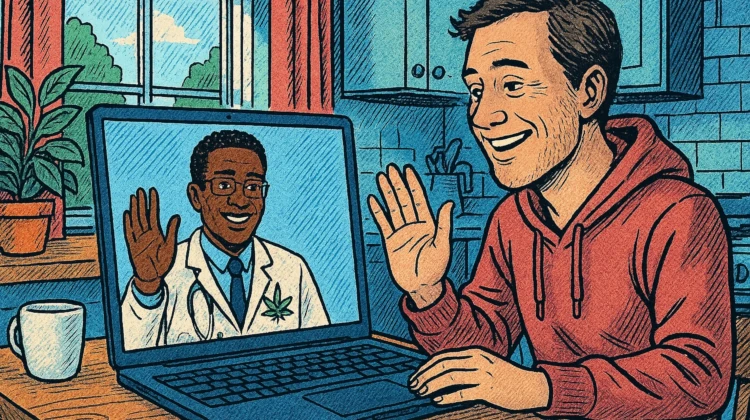
- Use a reputable telemedicine service or clinic like NuggMD that specializes in medical cannabis and understands your local rules
6. Understand the Pros and Cons Before You Apply
Before you apply, it can help to review the pros and cons of getting a medical marijuana card so you know how it might affect your health, budget, and daily life.
Can You Try to Get a Medical Card Again Later?
In most cases, yes. Being denied once doesn’t permanently disqualify you.
However, how and when you should try again depends on the reason for your denial.
When Trying Again Soon Makes Sense
It’s often reasonable to reapply fairly quickly if:
- Your application was rejected due to missing documents, an expired ID, or clerical errors. You’ve addressed them.
- You now have stronger medical records, such as new visit notes or a formal diagnosis.
- The clinician requested additional documentation, and you’ve since obtained it.
In many state programs, you can submit a corrected or updated application once the issue is resolved. Check your state program’s instructions for specific appeal or resubmission steps.
When It’s Better to Pause and Regroup
It can be wise to wait and address underlying issues before trying again if:
- A clinician denied you because they felt cannabis was unsafe with your current mental health, substance use, or medical status.
- You were advised to try certain standard treatments first and haven’t explored them yet.
- You didn’t yet have a clear diagnosis, and your doctor recommended further evaluation.
In these situations, focusing on stabilizing your health and updating your records can make a future evaluation smoother and safer.
Is It Okay to Get a Second Opinion?
Yes. There’s nothing wrong with seeking a second opinion from another qualified clinician, especially one experienced with medical cannabis evaluations.
A second opinion may be helpful if:
- You felt your concerns weren’t heard the first time.
- The clinician seemed strongly anti-cannabis in general.
- You now have additional records or a clearer diagnosis to share.
Don’t try to hide previous denials or medical history. Your goal isn’t to find the most lenient provider; it’s to get a fair evaluation of whether cannabis is appropriate and safe for you.
Renew Your Card
And if you already have a card, remember you’ll need to renew your medical marijuana card regularly. Renewal timelines and follow-up evaluations vary by state, so check your program’s rules in advance.
The information in this article and any included images or charts are for educational purposes only. This information is neither a substitute for, nor does it replace, professional legal advice or medical advice, diagnosis, or treatment. If you have any concerns or questions about laws, regulations, or your health, you should always consult with an attorney, physician or other licensed professional.