In This Article
- What is Indica?
- Usage
- Popular Indica Strains
- What is Sativa?
- Usage
- Popular Sativa Strains
- What are Hybrids?
- Usage
- Popular Hybrid Strains
- Indica vs. Sativa vs. Hybrid Effects
- Indica vs. Sativa vs. Hybrid Potency
- History of Classifying Cannabis as Indica or Sativa
- Indica vs. Sativa vs. Hybrid Summary
- Indica vs. Sativa vs. Hybrid: How to Choose the Right One?
- Is Indica or Sativa Better for Anxiety?
- What Makes You More Sleepy: Indica or Hybrid?
- Is Indica, Sativa, or Hybrid Better for Pain?
- The Same Subspecies Doesn't Guarantee the Same Effects
- References
Key Takeaways About Indica vs Sativa vs Hybrid
Today, cannabis producers typically classify their strains into one of three categories based on their effects: “Indica,” “Sativa,” or Hybrid. But these labels aren’t as simple as they seem.
Indicas are typically linked to relaxing effects, sativas to uplifting ones, and hybrids combine both. Still, terpenes and cannabinoids play a bigger role in your experience than just strain type. Knowing the difference can help guide your choice.
So, what really are the differences between "Indica," "Sativa," and Hybrid strains? Does the conventional wisdom about their effects hold up?
As the cannabis world has grown, the conversation has become more nuanced and complex, but fear not; there are still simple ways to pick the right strain for your needs.
What is Indica?
Today, the plants we consider indica are derived from the Afghanica variety, known as the “broad leaf drug type.”
The term Cannabis sativa subsp .indica var. afghanica refers to all cannabis varieties from dry regions of Central Asia, primarily Afghanistan, but also Pakistan and Iran.
These cannabis plants have many branches and heavy buds, giving them a dense appearance. They have dark green, short, broad leaves to minimize water loss. They typically grow only 2-4 ft tall indoors (taller outdoors). The plant's high resin content makes it ideal for hash production. Compared to their counterparts, these plants have shorter growth periods, mature early in the season, and exhibit higher frost tolerance, which supports the theory below.
It is believed that these plants originated from the Hindu Kush Mountains, where they adapted to the cold climate. In addition to late-season cold snaps in Central Asia, these conditions may explain the plant's high resin production and purple color, as both are produced in response to the cold environment to protect the plant.1,2
Usage
As cannabis has evolved, so have the modern terms used to describe it. In modern settings, like your local dispensary, the term "Indica" is often used to describe a strain or product's possible intoxicating effects.
"In-da-couch" is a popular phrase that indicates items labeled "Indica" may provide a more relaxing, sedating effect. Cannabis flower and products labeled as "Indica" may offer consumers a stronger body high.
Several studies have done lab analysis on "Indica" labeled strains and found that they had higher levels of terpenes like myrcene, pinene, and caryophyllene present compared to "sativa" labeled strains.1,2
Whatever the combination, the blend of cannabinoids and terpenes typically found in these strains may provide effects many medical cannabis patients turn to when dealing with conditions like insomnia, chronic pain, and anxiety.3
Because of their potential body-heavy effects, consumers often consider indicas best for nighttime use. However, this effect is not universal, as people can react to cannabis differently. As a result, it is not uncommon for individuals to feel more uplifted after using a product labeled indica.
Some users also report more intense side effects like dry mouth, red eyes, and paranoia after smoking strains labeled as indica.
Popular Indica Strains
Famous indica strains include, but aren't limited to:
- Hindu Kush
- Afghan Kush
- Grand Daddy Purple
- Northern Lights
- Blueberry
These strains can sometimes be challenging to find on dispensary shelves. If your dispensary has a wide selection of strains, you can often find the desired effects by seeking out strains rich in terpenes like myrcene, linalool, pinene, and caryophyllene.
What is Sativa?
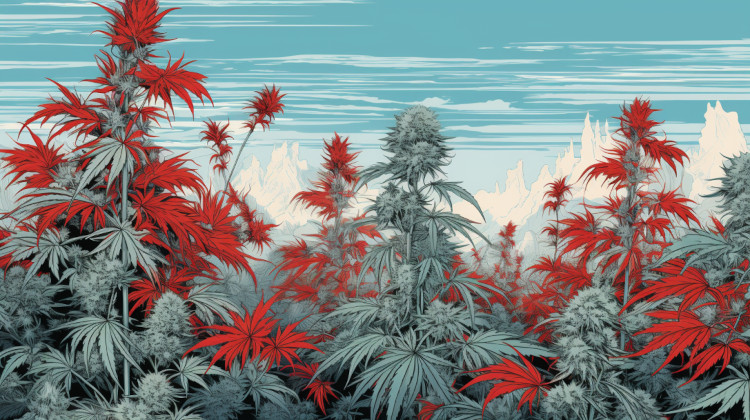
On the other side is cannabis sativa, or the "narrow leaf drug type," from which the sativa we are familiar with today comes. Seems confusing, right? This is where the modern terms "Indica" and "Sativa" create a rift among consumers, cultivators, and scientists, as they don’t align with botanical definitions or, in some cases, the morphological appearance of the cannabis varieties we have today.
The cannabis sativa subsp. indica var.indica is much taller than its afghanica counterpart. It has tree-like branches that spread and grow upward, with long, narrow leaves, giving the plant a much more open, aerated appearance. Where afghanica buds group around the nodes, flowers on this variety are found in and along the stalks.
It is thought that indica plants adapted their thin leaves to reduce transpiration and ensure good aeration on hot days. These plants have more extended vegetative growth periods of 10-16 weeks and produce less dense buds than the afghanica variety.1
The sativa plants in dispensaries that we know today, Cannabis sativa subsp. indica var.indica originates from South Asia, primarily India, where it was then dispersed to places like Southeast Asia, Africa, and the Americas.1 This variety was discovered by Lamarck in 1785.
Usage
In today's market, sativa-labeled products are typically associated with a stimulating "cerebral" effect that may promote feelings of creativity, making them suitable for social situations and artistic endeavors. It is often considered a more desirable daytime experience for many.
Several studies have conducted lab analyses of sativa-labeled products, finding that they may contain slightly higher levels of CBC and CBG. They also tend to have higher levels of terpinolene and limonene.3,4
Because of the typically more stimulating mental effects many individuals feel, sativa strains may often be used by consumers searching for relief from mood disorders, depression, and ADHD.
It is important to note that some users have reported feelings of anxiety, insomnia, and dizziness when consuming sativa-labeled products. Interestingly, animal research indicates that isolated terpinolene can cause drowsiness and sedation.4 However, in combination with cannabinoids like THC, researchers believe it may produce stimulating effects.5
Popular Sativa Strains
- Sour Diesel
- Jack Herer
- Acapulco Gold
- Panama Red
- Strawberry Cough
- Green Crack
- Tangie
- Train Wreck
What are Hybrids?
Hybrid cannabis strains can produce effects ranging from uplifting to relaxing. It depends on factors like whether their terpene blend and whether they're indica or sativa dominant. Sativa-dominant hybrids may energize and enhance creativity. Meanwhile, indica-dominant hybrids may promote relaxation and stress relief. Balanced hybrids aim to offer a mix of both effects.
Hybrids are a cross between any two strains that can carry some effects of both the traditional high-THC cannabis varieties, Cannabis sativa subsp.indicavar. Afghanica ("Indica") and Cannabis sativa subsp. indica var. indica ("Sativa"). A hybrid plant can be a cross between two afghanica or two indica variety plants, or a cross of an afghanica and an indica plant. Almost all modern strains are technically classified as hybrids, and you will rarely find pure (or landrace) strains.6
According to High Times, the first hybrid strains were developed during the 1960s when consumers began searching for higher THC levels. At the time, cannabis was grown almost entirely outdoors, so breeders needed plants that finished growing early enough to cultivate outdoors in the North American climate. Although Northern Mexican and Jamaican (Cannabis sativa) strains flowered faster, they didn't deliver high THC levels. So breeders crossed them with Panamanian, Colombian, and Thai (Cannabis indica) strains that produced high levels of THC and flowered longer.
Then, through a process called inbreeding – taking male and female sibling plants with desirable characteristics and breeding them – they created many of the original sativa and indica strains we know today.7
Hybrids combine indica and sativa genetics to balance effects. Some are more calming, while others feel energizing. Because hybrids vary widely, checking the terpene profile is a better way to predict effects than simply relying on the label.
Usage
Many consumers assume hybrids are a balanced mix of the typical cerebral and body effects of sativas and indicas. However, they fall more on a spectrum. Because hybrids are derived from two different strains, their effects largely depend on their parent strains and their unique terpene and cannabinoid profiles.
When browsing available hybrids, asking about the strain's terpenes can help you navigate which one might best address your symptoms.
Popular Hybrid Strains
The following strains are sometimes labeled as indica or sativa. This is because the specific batch's chemotype – the genetic makeup of cannabinoids and terpenes – may be more inclined to produce effects associated with the commercial indica and sativa terms.
Indica vs. Sativa vs. Hybrid Effects
There is much debate within the community over whether the labels indica, sativa, and hybrid are valid ways to compare the effects of two strains in today's heavily hybrid market. However, choosing indica, sativa, or hybrid labels seems to be an easy starting point for narrowing an extensive list of strains.
While it isn’t a hard rule and more of a generalization, many cannabis users believe the following:
- Indica indicates a more relaxed effect.
- Sativa is more stimulating.
- Hybrid offers a more balanced experience that falls somewhere in between.
While many breeders and companies use indica, sativa, and hybrid labels in a more modern way to help consumers find the desired effects based on a particular terpene profile, there are equally as many who haphazardly stick any label on their products, regardless of terpene profile. This can lead consumers to pick up the wrong product, especially if the state doesn’t mandate terpene testing or the company doesn’t include it on the packaging. (Hint: You can always ask to see a COA for a product at a dispensary!)
It is generally best to focus on a particular strain’s cannabinoid and terpene profile rather than on a label such as "Indica," "Sativa," or "Hybrid." Still, if your state does not mandate testing for terpenes, these labels may be your best indicator other than trying a variety of strains out to see which ones you like best.
Indica vs. Sativa vs. Hybrid Potency
"Strength" can refer to potency or the intensity of effects, which varies by strain. Sativa strains often have higher THC levels, leading to more cerebral effects. Indica strains may have higher CBD content, resulting in more body-focused relaxation.
But these generalizations won't hold true for every sativa and indica. THC and CBD levels can vary from plant to plant, even if they have the same genetics and growing conditions. Instead, researchers noted more prominent differences in the terpene profiles between different cannabis subspecies.6
Individual responses can vary, so personal experience is key when choosing your strains with the right potency for your experience and desired effects.
History of Classifying Cannabis as Indica or Sativa
Botanically, the terms "Indica" and “Sativa” have vastly different meanings from what consumers are thinking when it comes to cannabis strains, which is why many are calling for these outdated terms to be replaced, with more emphasis focused on the cannabinoid and terpene profile of the strain.
The Cannabis sativa subspecies was identified in Europe 32 years before the discovery of the indica subspecies in 1753 by Carl Linnaeus, the "father of modern taxonomy." In 1785, biologist and academic Jean-Baptiste Lamarck collected samples from cannabis plants found growing in India.
He labeled these plants, originating in India and spreading to Southeast Asia and Africa, as Cannabis indica, whose features differentiated it from the previously discovered and labeled Cannabis sativa. Lamarck reported that, in contrast to the Cannabis sativa type Linnaeus had identified, it was also intoxicating and had a strong smell.
Much later, in 1924, the afghanica variety was identified by Nikoli Vavilov and his team when they found farmers in Afghanistan cultivating cannabis to make hash. In 1976, Ernest Small established formal nomenclature, officially naming the species Cannabis sativa, with indica and sativa designated as subspecies. As it stands, there are four main subspecies of the Cannabis sativa species:
- Cannabis sativa subsp. indica var. afghanica
- Cannabis sativa subsp. indica var. indica
- Cannabis sativa subsp. sativa var. sativa (what we know as ‘hemp’)
- Cannabis sativa subsp. sativa var. chinesis.8
This article will focus on the afghanica and indica varieties, as they represent the genetic history of the current "Indica" and "Sativa" plants we see today. The terms "Indica" and "Sativa" became areference to the physical attributes of the plants in the early 1980s, and a "Hybrid" just indicates it is a cross between two plants. However, in today’s market, "Indica," "Sativa," and Hybrid have evolved as descriptors intended to tell consumers what effects they might feel when consuming the product. This categorization approach has sparked a long-running debate among cultivators, marketing teams, retailers, and consumers over the validity of the titles and whether a better terpene-based approach exists.9
Indica vs. Sativa vs. Hybrid Summary
This table reflects patient experiences commonly reported with indica, sativa, or hybrid-labeled strains, and why they choose to use them. Individuals new to cannabis may use this as a starting point; however, the effects are not guaranteed to be the same for everyone. The focus should instead be on the cannabinoid and terpene profiles present rather than the label of "indica," "sativa," or hybrid.
| Reasons for Use | Reported Effects | |
| "Indica"(Cannabis sativa subsp. indica var. afghanica) | Insomnia, relaxation, pain relief | Associated with a body high, calming, soothing feelings |
| "Sativa"(Cannabis sativa subsp. indica var. indica) | Associated with uplifting, stimulating, cerebral feelings | Associated with uplifting, simulating, cerebral feelings |
| Hybrid | Anxiety relief, pain relief | Associated with both euphoria and relaxation |
Indica vs. Sativa vs. Hybrid: How to Choose the Right One?
There's no universally "better" option among indica, sativa, or hybrid strains. It depends on individual preferences and desired effects.
- Indica: Often associated with relaxing effects, making them suitable for evening use.
- Sativa: Typically linked to energizing effects, ideal for daytime activities.
- Hybrid: Combines characteristics of both, offering a balanced experience.
For a more personalized choice, consider the strain's cannabinoid and terpene profile, as well as your desired effects.
Do you want something to inspire and create? To relax? To socialize? To sleep? Or, are you searching for a specific medical benefit, such as pain or anxiety relief?
Choosing the right strain is personal. Labels like indica, sativa, or hybrid can offer a rough guide, but effects depend more on terpenes and THC/CBD levels. Think about when and why you’re using cannabis. Choose based on how strains make you feel, not just how they’re classified.
Is Indica or Sativa Better for Anxiety?
Consumers often prefer indica strains for anxiety due to their calming and sedative effects. This may help reduce stress and promote relaxation. Sativa strains, while uplifting, may exacerbate anxiety in some individuals due to their stimulating properties. However, responses vary; some may find relief with certain sativa strains.
What Makes You More Sleepy: Indica or Hybrid?
Indica strains are generally more associated with sleep-inducing effects. Indica-dominant hybrids may promote sleep, while sativa-dominant hybrids might be more energizing for the average consumer. Choosing the right strain depends on individual tolerance, desired outcomes, and personal experience.
Is Indica, Sativa, or Hybrid Better for Pain?
Indica strains are commonly favored for pain relief due to their relaxing effects and higher average CBD content, which some studies have associated with relief of chronic pain and inflammation. Sativa strains may help with certain types of pain by providing an uplifting effect. Hybrids can offer a balanced approach, depending on their specific cannabinoid profiles.
The Same Subspecies Doesn't Guarantee the Same Effects
While the effects of strains can be similar among a wide variety of users, everyone's endocannabinoid system and body are different. Observing which strains make you feel energized, calm, or sleepy and experimenting with new strains is the best way to find what works for you specifically.
Navigating the strains and products available at a dispensary can be overwhelming. It can be challenging to learn a strain’s terpene and cannabinoid profile, and even if you do understand which terpenes are associated with which effects, the sensation produced may feel entirely different alongside the other terpenes and cannabinoids found in the plant.10 Some cannabis brands don’t show this information on their products, while others don't even test for these features.
Other times, a cultivar grown by two different farms can be categorized as totally opposite categories, as in the case of the AK-47 strain that won both the best "Indica" and best “Sativa” in two different years at the Cannabis Cup.
Be patient with the process, and trust your experience as the industry works through these kinks.
Dr. Ethan Russo, former director of research and development for the International Cannabis and Cannabinoids Institute, once said, "It is essential that future commerce allows complete and accurate cannabinoid and terpenoid profiles to be available."11
References
- Hazekamp A, Tejkalová K, Papadimitriou S. Cannabis: From Cultivar to Chemovar II—A Metabolomics Approach to Cannabis Classification. Cannabis and Cannabinoid Research. 2016;1(1):202-215. doi:https://doi.org/10.1089/can.2016.0017
↩︎ - Elzinga S, Fischedick J. Cannabinoids and Terpenes as Chemotaxonomic Markers in Cannabis. Natural Products Chemistry & Research. 2015;3(4). doi:https://doi.org/10.4172/2329-6836.1000181
↩︎ - Sholler DJ, Moran MB, Dolan SB, et al. Use patterns, beliefs, experiences, and behavioral economic demand of indica and sativa cannabis: A cross-sectional survey of cannabis users. Experimental and Clinical Psychopharmacology. 2021;30(5). doi:https://doi.org/10.1037/pha0000462
↩︎ - Ito K, Ito M. The sedative effect of inhaled terpinolene in mice and its structure–activity relationships. Journal of Natural Medicines. 2013;67(4):833-837. doi:https://doi.org/10.1007/s11418-012-0732-1
↩︎ - Raz N, Eyal AM, Zeitouni DB, et al. Selected cannabis terpenes synergize with THC to produce increased CB1 receptor activation. Biochemical Pharmacology. 2023;212. doi:https://doi.org/10.1016/j.bcp.2023.115548
↩︎ - McPartland JM, Guy GW. Models of Cannabis Taxonomy, Cultural Bias, and Conflicts between Scientific and Vernacular Names. The Botanical Review. 2017;83(4):327-381. doi:https://doi.org/10.1007/s12229-017-9187-0
↩︎ - Barcaccia G, Palumbo F, Scariolo F, Vannozzi A, Borin M, Bona S. Potentials and Challenges of Genomics for Breeding Cannabis Cultivars. Frontiers in Plant Science. 2020;11. doi:https://doi.org/10.3389/fpls.2020.573299
↩︎ - McPartland JM. Cannabis Systematics at the Levels of Family, Genus, and Species. Cannabis and Cannabinoid Research. 2018;3(1):203-212. doi:https://doi.org/10.1089/can.2018.0039
↩︎ - McPartland JM, Small E. A classification of endangered high-THC cannabis (Cannabis sativa subsp. indica) domesticates and their wild relatives. PhytoKeys. 2020;144:81-112. doi:https://doi.org/10.3897/phytokeys.144.46700
↩︎ - McPartland JM. Cannabis sativa and Cannabis indica versus “Sativa” and “Indica.” In: Chandra S, Lata H, ElSohly M, eds. Cannabis Sativa L. - Botany and Biotechnology. Springer, Cham; 2017:101-121. doi:https://doi.org/10.1007/978-3-319-54564-6_4
↩︎ - Piomelli D, Russo EB. The Cannabis sativa Versus Cannabis indica Debate: An Interview with Ethan Russo, MD. Cannabis and Cannabinoid Research. 2016;1(1):44-46. doi.org/10.1089/can.2015.29003.ebr
↩︎
The information in this article and any included images or charts are for educational purposes only. This information is neither a substitute for, nor does it replace, professional legal advice or medical advice, diagnosis, or treatment. If you have any concerns or questions about laws, regulations, or your health, you should always consult with an attorney, physician or other licensed professional.